
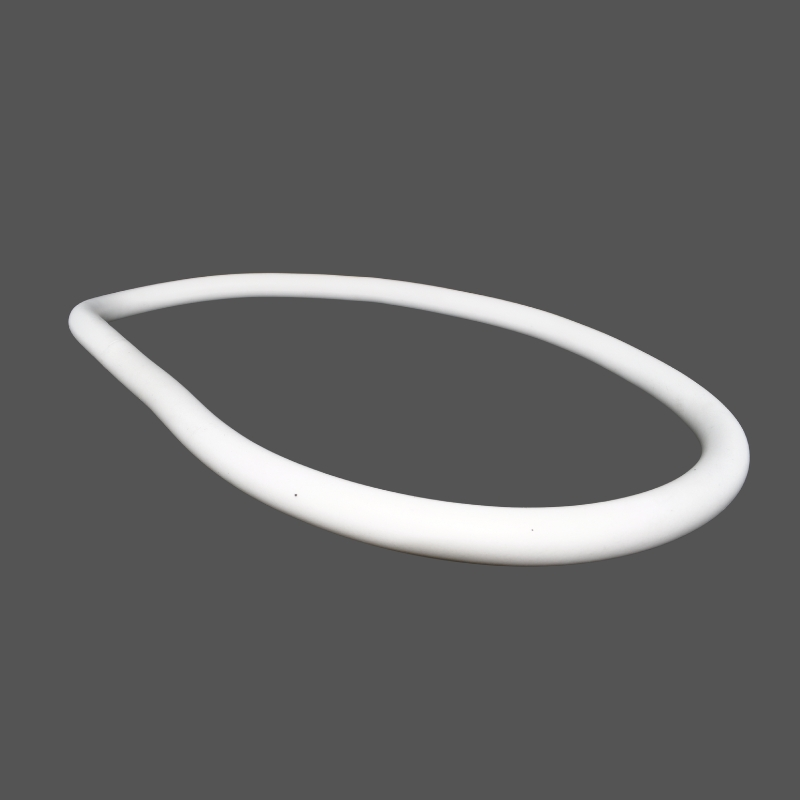
VMQ Solid Silicone Door Gasket
Engineered to hold a leak-proof seal through thousands of open/close cycles without hardening or taking a permanent set, this silicone door gasket delivers continuous service from -60°C to 200°C — wide enough to cover every stage from cold-storage shipping to full-temperature oven operation. The compound is built on a polydimethylsiloxane (VMQ) base, extruded to OEM…
Specifications
|
Product Type: |
Silicone Door Sealing Ring / Extrusion Gasket
|
|---|---|
|
Base Polymer: |
Polydimethylsiloxane (VMQ)
|
|
Structure: |
Solid
|
|
Color: |
Standard: gray, red, black; custom colors available
|
|
Surface Finish: |
Smooth / Matte
|
|
Standards & Compliance: |
|
|
Hardness: |
50 ± 5 Shore A (40–70 Shore A range available)
|
|
Tensile Strength: |
≥ 7 MPa
|
|
Elongation at Break: |
≥ 300%
|
|
Tear Strength: |
≥ 20 kN/m
|
|
Recommended Service Temperature: |
-60°C to +200°C continuous; up to +230°C short-term
|
|
Hot Air Aging: |
200°C × 72h: hardness change ≤ ±8 Shore A; elongation retention ≥ 70%
|
|
Low‑Temperature Brittleness: |
≤ -55°C
|
|
Typical Applications: |
Oven door seals, dishwasher lid gaskets, microwave door seals, washing machine door covers, steamer/cooker lid gaskets
|
Description:
An oven door opens and closes 10 to 20 times per day. Over a five-year product lifecycle, that adds up to 18,000–36,000 compression-recovery cycles — each a small, cumulative test of the gasket’s elastic memory. The failure mode isn’t sudden rupture. It’s gradual set: a seal that can no longer recover its original thickness allows heat to escape around frame corners, degrading energy efficiency ratings and triggering warranty claims before the appliance hits its design life.
Typical Industry Applications:
Proven performance across demanding manufacturing environments.
| Industry | Typical Use Cases |
|---|---|
| Home Appliances | Oven door perimeter seals, microwave door gaskets, dishwasher lid seals, washing machine door covers, steam-oven frame seals |
| Food & Beverage Equipment | Commercial oven door gaskets, food steamer lid seals, institutional dishwasher door seals (GB 4806.16-2025 food-grade variants) |
| Electronics & Industrial Machinery | Industrial drying-oven door seals, laboratory autoclave access-panel gaskets, thermal-cycling chamber door seals |
| Construction & Architecture | HVAC equipment access door seals, high-temperature duct and damper frame gaskets |
Chemical Resistance Table:
| Chemical / Medium | Resistance | Notes |
| Water (cold/warm) | ✅ Excellent | Minimal water absorption; suitable for continuous immersion contact |
| Steam (100–150°C) | ✓ Good | Slight temporary swelling possible; recovers on drying |
| Dilute acids (pH > 3) | ✓ Good | Handles rinse-aid and mild acid cleaners in dishwasher cycles |
| Dilute alkalis / household detergents | ✓ Good | Stable through standard dishwasher detergent exposure |
| Concentrated alkalis (NaOH > 10%) | ⚠ Limited | Attacks siloxane backbone under prolonged contact at elevated temperature |
| Concentrated mineral acids | ✗ Not recommended | Rapid degradation |
| Vegetable and animal oils/fats | ✓ Good | Suitable for food appliance splash and incidental food contact |
| Mineral oils and greases | ⚠ Limited | Moderate swelling; acceptable for light grease contact at door hinge interfaces |
| Alcohols (ethanol, IPA) | ✓ Good | Common cleaning agents; minimal property degradation |
| Ketones (acetone) | ⚠ Limited | Brief cleaning-only contact acceptable; prolonged exposure not recommended |
| Aliphatic hydrocarbons | ⚠ Limited | Moderate swelling expected on extended contact |
| Aromatic hydrocarbons (toluene, xylene) | ✗ Not recommended | Significant swelling; not suitable for solvent-contact environments |
| Ozone / UV / weathering | ✅ Excellent | No antiozonant additives required; inherent backbone stability |
| Hot air (200°C continuous) | ✅ Excellent | Core thermal stability of the VMQ siloxane backbone |
In-House Quality Assurance & Testing:
At Micune Rubber, batch-to-batch consistency is guaranteed through our ISO-9001 certified Quality Management System. Every rubber compound and custom extrusion undergoes rigorous evaluation in our dedicated testing laboratory before shipment. We utilise industry-standard baseline testing, including Mooney Viscometers to measure compound viscosity and Torque Rheometers to verify exact vulcanisation characteristics. This ensures every material formulation strictly adheres to your required specifications and processing parameters.
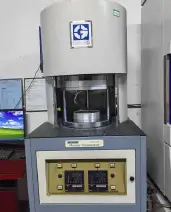
Mooney Viscometer
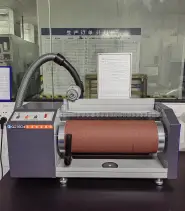
Abrasive Testing Machine
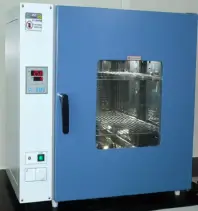
Burn-in Chamber
