
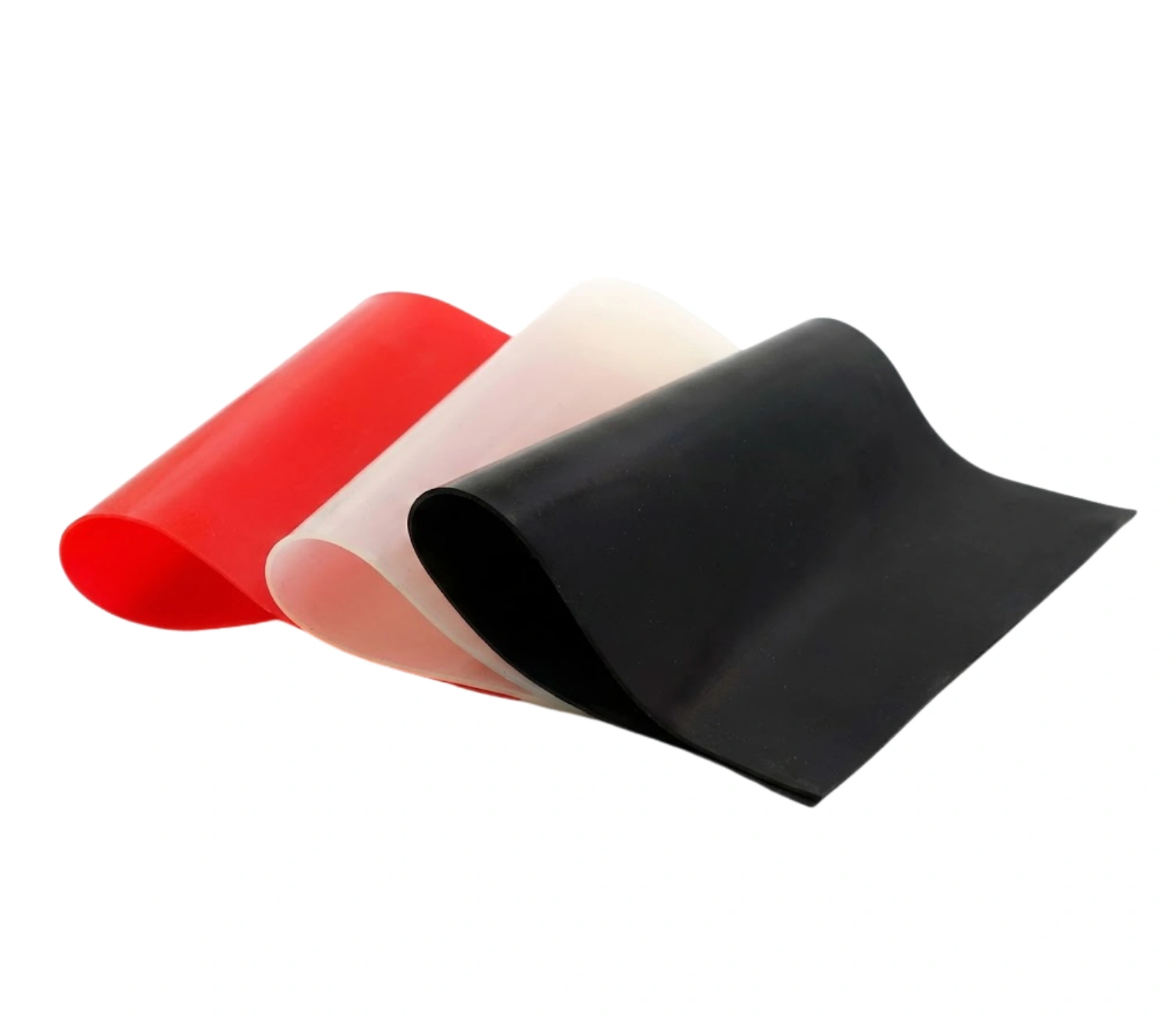
EPDM Rubber Compound
EPDM rubber compound remains the go-to elastomer where long-term weathering resistance isn’t negotiable. Its fully saturated carbon backbone has no reactive double bonds available for ozone or UV attack, which is precisely why it outlasts most other polymers in outdoor sealing, roofing, and automotive door seal applications. Available across a wide hardness range and processable…
Specifications
|
Product Type: |
Custom Rubber Compound (Extrudable / Moldable)
|
|---|---|
|
Base Polymer: |
EPDM (Ethylene Propylene Diene Monomer)
|
|
Structure: |
Solid; foamed grades available on request
|
|
Color: |
Black (standard); custom colors available
|
|
Surface Finish: |
Smooth (standard); flocked or coated per customer spec
|
|
Standards & Compliance: |
|
|
Hardness: |
40–80 Shore A; standard grade 60 ± 5 Shore A
|
|
Tensile Strength: |
≥ 8 MPa
|
|
Elongation at Break: |
≥ 400%
|
|
Tear Strength: |
≥ 20 kN/m
|
|
Recommended Service Temperature: |
-40°C to +150°C (peroxide cure); -40°C to +120°C (sulfur cure)
|
|
Hot Air Aging: |
70°C × 70h: Hardness change 0 to +10 Shore A; tensile retention ≥ 80%; elongation retention ≥ 60%
|
|
Low‑Temperature Brittleness: |
≤ -40°C (no cracking)
|
|
Typical Applications: |
Automotive door & window seals, construction weatherstripping, EPDM roofing membranes, water pipe sealing profiles, industrial gaskets
|
Description:
EPDM’s durability in outdoor environments comes down to one structural fact: its backbone is fully saturated. Natural rubber, SBR, and neoprene all carry residual double bonds along the polymer chain — exactly the sites where ozone and UV radiation initiate degradation. EPDM eliminates that vulnerability. The diene monomer (ENB, typically at 4–9 wt%) is incorporated only as a cure-site pendant group, leaving the main chain chemically inert to atmospheric attack.
The practical result is a compound that maintains its mechanical integrity through years of UV exposure, temperature cycling, and contact with dilute acids and alkalis. A peroxide-cured EPDM grade holds its properties from -40°C to 150°C continuously. That range covers Canadian winters, Middle Eastern rooftops, and automotive underhood environments — sometimes within the same product run.
Typical Industry Applications:
Proven performance across demanding manufacturing environments.
| Industry | Typical Use Cases |
|---|---|
| Automotive & Motorcycle | Door seals, window channel seals, hood/trunk weatherstripping, coolant hoses, radiator seals |
| Construction & Architecture | Curtain wall glazing seals, window and door frame profiles, expansion joint strips, roofing membrane edge sealing |
| Water Supply & Infrastructure | Pipe coupling gaskets, water meter seals, irrigation system O-rings; composite-modified grade per patent ZL 2023 1 1245900.8 |
| Home Appliances | Washing machine lid seals, steam iron gaskets, dishwasher door gaskets |
| Industrial Machinery | Pump housing seals, outdoor electrical enclosure gaskets, vibration-dampening pads |
Chemical Resistance Table:
| Chemical / Medium | Resistance | Notes |
|---|---|---|
| Ozone (outdoor/ambient) | ✅ Excellent | Core strength of the saturated backbone; no cracking under standard ASTM D1149 ozone exposure |
| UV / Sunlight | ✅ Excellent | Carbon black-filled grades provide enhanced UV shielding |
| Hot Water (≤ 100°C) | ✅ Excellent | Hardness change ≤ ±10 Shore A at 100°C × 72h |
| Steam (≤ 120°C) | ✓ Good | Peroxide-cured grades preferred for sustained steam exposure |
| Dilute Acids (weak: pH ≥ 3) | ✓ Good | Suitable for mild acid condensate environments |
| Dilute Alkalis | ✓ Good | Maintains integrity in cleaning solution contact |
| Ethylene Glycol / Coolant | ✓ Good | Validated per in-house coolant immersion test (118°C × 72h) |
| Ketones (acetone, MEK) | ⚠ Limited | Moderate swelling; not recommended for prolonged immersion |
| Aliphatic Hydrocarbons | ⚠ Limited | Some swelling in petroleum distillates; EPDM is not an oil-resistant elastomer |
| Aromatic Hydrocarbons (toluene, xylene) | ✗ Not recommended | Significant swelling; use NBR or FKM instead |
| Mineral Oils / Petroleum-Based Hydraulic Fluids | ✗ Not recommended | EPDM is fundamentally incompatible with non-polar hydrocarbon oils |
| Synthetic Ester-Based Hydraulic Fluids | ✓ Good | Phosphate ester fluids are generally compatible |
| Concentrated Acids (sulfuric, nitric) | ✗ Not recommended | Oxidizing acids degrade the polymer chain |
In-House Quality Assurance & Testing:
At Micune Rubber, batch-to-batch consistency is guaranteed through our ISO-9001 certified Quality Management System. Every rubber compound and custom extrusion undergoes rigorous evaluation in our dedicated testing laboratory before shipment. We utilise industry-standard baseline testing, including Mooney Viscometers to measure compound viscosity and Torque Rheometers to verify exact vulcanisation characteristics. This ensures every material formulation strictly adheres to your required specifications and processing parameters.
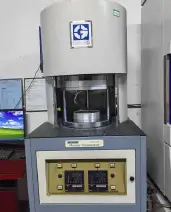
Mooney Viscometer
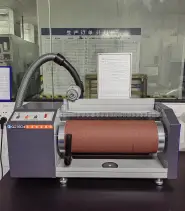
Abrasive Testing Machine
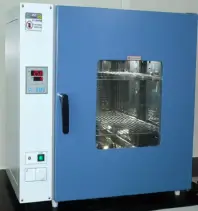
Burn-in Chamber
