
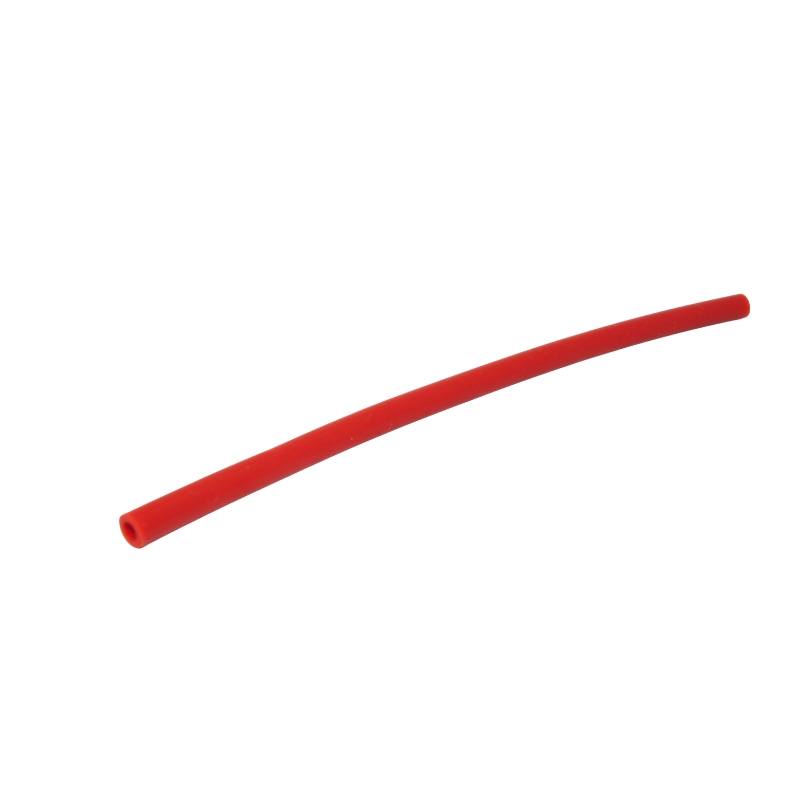
Dual-Color Silicone Steam Spray Tube
Built to handle continuous steam at temperatures up to 200°C, this co-extruded dual-color silicone tube delivers the flexibility and heat endurance that steam mop and floor washer manufacturers demand. The VMQ (vinyl methyl silicone) compound resists thermal degradation cycle after cycle, maintaining its original Shore A hardness and tensile integrity long after cheaper TPE alternatives…
Specifications
|
Product Type: |
Co-Extruded Silicone Tube
|
|---|---|
|
Base Polymer: |
VMQ (Vinyl Methyl Silicone Rubber)
|
|
Structure: |
Co-extruded dual-color (inner/outer layer)
|
|
Color: |
Dual-color combinations available (e.g., white inner / grey outer, translucent / colored); custom color matching per Pantone or RAL
|
|
Surface Finish: |
Smooth (outer); Smooth (inner bore)
|
|
Standards & Compliance: |
|
|
Hardness: |
50 ± 5 Shore A (standard); 40–70 Shore A customizable
|
|
Tensile Strength: |
≥ 7.0 MPa
|
|
Elongation at Break: |
≥ 300%
|
|
Tear Strength: |
≥ 20 kN/m
|
|
Recommended Service Temperature: |
-60°C to +200°C (intermittent to +230°C)
|
|
Hot Air Aging: |
200°C × 72h: Hardness change ≤ ±5 Shore A
|
|
Low‑Temperature Brittleness: |
≤ -60°C
|
|
Typical Applications: |
Steam mop spray tubes, floor washer steam hoses, steam iron routing tubes, garment steamer conduits, steam cleaning appliance ducting
|
Description:
Steam appliance tubing lives in a punishing environment. Temperatures spike above 150°C during normal operation, condensation forms on every cool-down cycle, and the tube must flex through tight routing paths without kinking. VMQ silicone handles all of this because of its molecular backbone — alternating silicon and oxygen atoms form an inorganic chain with bond dissociation energy significantly higher than the carbon-carbon bonds found in organic rubbers like EPDM or NBR. The practical result: VMQ holds its elasticity and compression set resistance across a temperature window from -60°C to +200°C, far beyond what any organic elastomer can sustain.
That same Si-O backbone also makes VMQ inherently resistant to ozone, UV, and oxidative degradation. For a steam hose routed inside an appliance housing where heat accumulates, this translates to a service life measured in years rather than months. Silicone rubber tube manufacturers who understand steam appliance demands know that material choice at this stage determines warranty exposure downstream.
Typical Industry Applications:
Proven performance across demanding manufacturing environments.
| Industry | Typical Use Cases |
|---|---|
| Home Appliances | Steam mop spray tubes, floor washer steam hoses, steam iron internal routing, garment steamer conduits |
| Cleaning Equipment | Commercial steam cleaner delivery hoses, carpet cleaning machine steam lines |
| Kitchen & Small Appliances | Steam oven internal tubing, countertop steamer hoses, steam-based food prep equipment ducting |
| HVAC & Humidification | Humidifier steam delivery tubes, steam distribution lines in controlled environments |
| Industrial Equipment | Steam generator output hoses, autoclave vent tubing, laboratory steam routing |
Chemical Resistance Table:
| Chemical / Medium | Resistance | Notes |
|---|---|---|
| Steam (to 200°C) | ✅ Excellent | Core application; tested to 200°C × 72h |
| Water (hot & cold) | ✅ Excellent | No hydrolysis or swelling |
| Ozone | ✅ Excellent | Inherent Si-O backbone resistance |
| UV radiation | ✅ Excellent | No chain scission under prolonged exposure |
| Dilute acids (< 10%) | ✓ Good | Suitable for mild descaling solutions |
| Dilute alkalis (< 10%) | ✓ Good | Compatible with common cleaning agents |
| Ethanol | ✓ Good | Minimal swell at room temperature |
| Mineral oils | ⚠ Limited | VMQ swells in hydrocarbon oils; avoid continuous contact |
| Gasoline / Petroleum solvents | ✗ Not recommended | Significant volume swell and strength loss |
| Toluene / Xylene | ✗ Not recommended | Aromatic solvents attack silicone |
| Concentrated sulfuric acid | ✗ Not recommended | Degrades Si-O backbone |
| Acetone | ⚠ Limited | Short-term contact acceptable; prolonged exposure causes swell |
| Hydraulic fluid (mineral-based) | ✗ Not recommended | Use FKM for hydraulic applications |
| Silicone-based fluids | ⚠ Limited | Can cause softening depending on viscosity grade |
| Hydrogen peroxide (< 10%) | ✓ Good | Compatible at low concentrations |
In-House Quality Assurance & Testing:
At Micune Rubber, batch-to-batch consistency is guaranteed through our ISO-9001 certified Quality Management System. Every rubber compound and custom extrusion undergoes rigorous evaluation in our dedicated testing laboratory before shipment. We utilise industry-standard baseline testing, including Mooney Viscometers to measure compound viscosity and Torque Rheometers to verify exact vulcanisation characteristics. This ensures every material formulation strictly adheres to your required specifications and processing parameters.
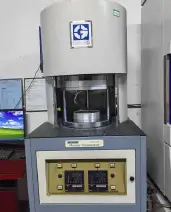
Mooney Viscometer
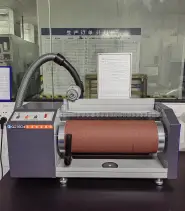
Abrasive Testing Machine
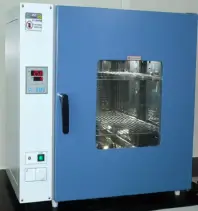
Burn-in Chamber
