
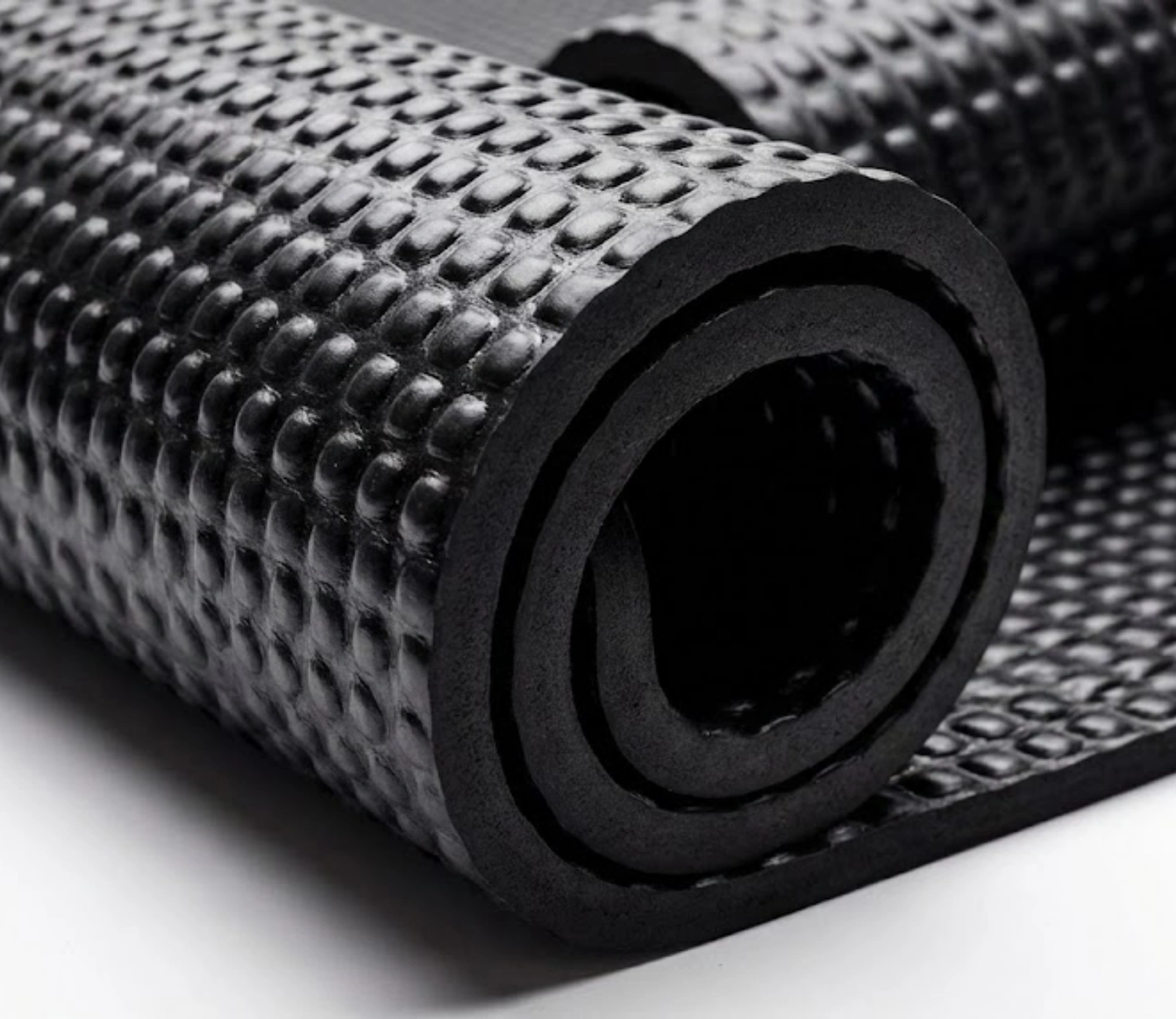
Butyl Rubber Compound (IIR / BIIR)
When gas containment is the non-negotiable requirement, no elastomer matches butyl. IIR rubber compound delivers the lowest air and gas permeability of any commercially available synthetic rubber — roughly 8–10× lower than NR or SBR — making it the default choice for pneumatic seals, pharmaceutical closures, and steam-service hoses where even trace leakage carries real…
Specifications
|
Product Type: |
Custom rubber compound (bale/pellet/extruded/molded semi-finished)
|
|---|---|
|
Base Polymer: |
IIR (Isobutylene-Isoprene Rubber) / BIIR (Bromobutyl Rubber)
|
|
Structure: |
Solid; homogeneous compound or reinforced-filled grades
|
|
Color: |
Black (standard); grey, white, and custom colors available
|
|
Surface Finish: |
Smooth (extruded/molded); matte available
|
|
Standards & Compliance: |
|
|
Hardness: |
40–80 Shore A (standard range); 50 ± 5 Shore A typical for sealing grades
|
|
Tensile Strength: |
≥ 9 MPa (standard grade); ≥ 12 MPa (reinforced compound)
|
|
Elongation at Break: |
≥ 300%
|
|
Tear Strength: |
≥ 20 kN/m
|
|
Recommended Service Temperature: |
-45°C to +120°C (continuous); up to +150°C (short-term steam service, BIIR grades)
|
|
Hot Air Aging: |
100°C × 72h: Hardness change ≤ ±8 Shore A; Tensile retention ≥ 80%
|
|
Low‑Temperature Brittleness: |
≤ -45°C
|
|
Typical Applications: |
Pneumatic seals, pharmaceutical rubber stoppers, tire inner liners, steam hoses, vibration isolation mounts
|
Description:
The isobutylene-isoprene copolymer backbone in IIR rubber is the key to understanding why this material holds its own against every newer elastomer on the market. That backbone is almost entirely saturated — less than 2 mol% unsaturation in standard IIR grades — which gives it exceptional resistance to heat, ozone, and UV without any additional antidegradant loading. More importantly, the sheer density and regularity of the methyl side groups pack the polymer chains so tightly that gas molecules simply cannot migrate through at meaningful rates. Air permeability coefficients for IIR run at 0.8–1.2 × 10⁻¹⁰ cm³·cm/cm²·s·cmHg — a figure that SBR, NR, and even EPDM can’t approach. That physical reality drives butyl’s continued dominance in tire inner liners, inflated ball bladders, and every pressurized seal where retention is paramount.
Bromobutyl (BIIR) takes the same backbone and introduces bromine atoms at the double-bond sites. The practical effect: faster cure kinetics, better co-vulcanization compatibility with high-diene rubbers, and meaningfully higher heat resistance — which is why BIIR is the compound of choice for autoclavable pharmaceutical closures and saturated-steam hose applications up to 150°C.
Typical Industry Applications:
Proven performance across demanding manufacturing environments.
| Industry | Typical Use Cases |
|---|---|
| Pharmaceutical & Medical Device | Rubber stoppers for vials and infusion bottles, autoclavable closures, IV set components |
| Automotive & Tire | Tire inner liners, tubeless valve gaskets, air spring diaphragms, HVAC refrigerant seals |
| Industrial Machinery | Vibration isolation mounts, anti-vibration pads, pneumatic cylinder seals, accumulator bladders |
| Steam & Process Hose | Saturated steam hoses (up to 150°C), chemical process hoses, heat-resistant hose liners |
| Sporting Goods | Inflatable ball bladders (basketball, soccer, football) requiring long-term air retention |
| Construction & Civil Engineering | Waterstop seals, expansion joint gaskets, roofing membrane splice adhesives |
Chemical Resistance Table:
| Chemical / Medium | Resistance | Notes |
|---|---|---|
| Air / Nitrogen (pressurized) | ✅ Excellent | Defining application — permeability coefficient among the lowest of any elastomer |
| Steam (saturated, ≤ 150°C) | ✅ Excellent | BIIR grades preferred; IIR acceptable up to ~120°C |
| Hot water (≤ 120°C) | ✅ Excellent | Minimal swell; good for steam condensate service |
| Dilute acids (H₂SO₄, HCl ≤ 20%) | ✓ Good | Suitable for mild acid splash or intermittent contact |
| Dilute alkalis (NaOH ≤ 30%) | ✓ Good | Acceptable for general alkaline environments |
| Ketones (acetone, MEK) | ✓ Good | Moderate swell; acceptable for intermittent exposure |
| Polar solvents (alcohols, glycols) | ✓ Good | Ethylene glycol (coolant) contact acceptable |
| Ozone & UV weathering | ✅ Excellent | Saturated backbone — no ozone cracking; outdoor exposure rating high |
| Mineral oils & fuels | ⚠ Limited | IIR has poor resistance to aliphatic hydrocarbons; not recommended for oil-immersion sealing |
| Aromatic hydrocarbons (toluene, xylene) | ✗ Not recommended | Significant swell and softening; choose NBR or FKM for aromatic service |
| Chlorinated solvents (TCE, DCM) | ✗ Not recommended | Rapid attack; select FKM or EPDM depending on other requirements |
| Concentrated acids (>50%) | ⚠ Limited | Case-by-case; contact with concentrated oxidizing acids causes degradation |
| Dilute phosphate esters (hydraulic fluid) | ⚠ Limited | Limited resistance; ECO or EPDM preferable for phosphate ester hydraulic systems |
| Ozone (static/dynamic) | ✅ Excellent | No antiozonant required for standard IIR/BIIR grades |
In-House Quality Assurance & Testing:
At Micune Rubber, batch-to-batch consistency is guaranteed through our ISO-9001 certified Quality Management System. Every rubber compound and custom extrusion undergoes rigorous evaluation in our dedicated testing laboratory before shipment. We utilise industry-standard baseline testing, including Mooney Viscometers to measure compound viscosity and Torque Rheometers to verify exact vulcanisation characteristics. This ensures every material formulation strictly adheres to your required specifications and processing parameters.
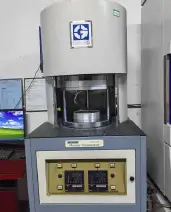
Mooney Viscometer
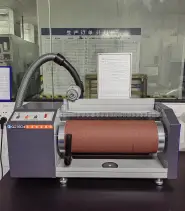
Abrasive Testing Machine
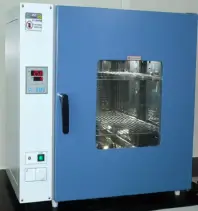
Burn-in Chamber
