
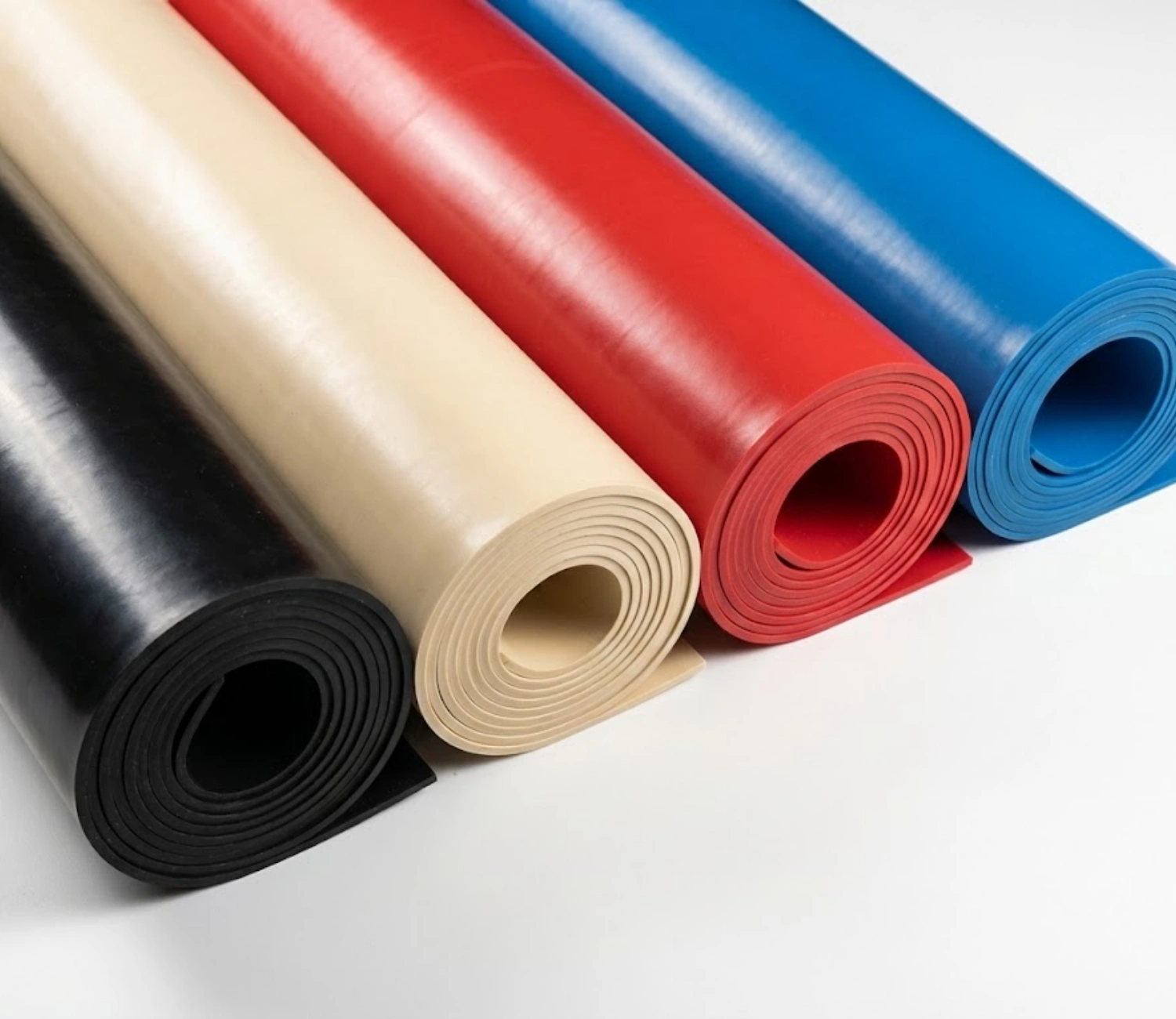
ACM Acrylic Rubber Compound
When NBR starts to harden and crack at 150°C, ACM — polyacrylate rubber — holds its shape, its seals, and your customer’s trust. Designed for the demanding thermal environments inside modern powertrains, this acrylic rubber compound delivers exceptional oil resistance at sustained temperatures where nitrile compounds simply fail — without the cost of a full…
Specifications
|
Product Type: |
Custom Rubber Compound / Molded or Extruded Parts
|
|---|---|
|
Base Polymer: |
ACM (Acrylate Rubber / Polyacrylate Rubber, Polyacrylic Rubber)
|
|
Structure: |
Solid
|
|
Color: |
Black standard; custom colors available on request
|
|
Surface Finish: |
Smooth; matte or textured per customer tooling
|
|
Standards & Compliance: |
|
|
Hardness: |
50–80 Shore A (standard: 60 ± 5 Shore A)
|
|
Tensile Strength: |
≥ 9 MPa
|
|
Elongation at Break: |
≥ 180%
|
|
Tear Strength: |
≥ 18 kN/m
|
|
Recommended Service Temperature: |
-25°C to +175°C (short excursions to +190°C)
|
|
Hot Air Aging: |
175°C × 70h: Hardness change ≤ +10 Shore A; Tensile retention ≥ 65%
|
|
Low‑Temperature Brittleness: |
≤ -25°C (TR10 method); enhanced cold grades available
|
|
Typical Applications: |
Automatic transmission seals, crankshaft rear oil seals, power steering hose, turbocharger oil return hose, high-temp gaskets
|
Description:
Most engineers reach for NBR first. It’s proven, it’s available everywhere, and at ambient and moderate temperatures it performs well in oil. The problem shows up around the 140–150°C range: NBR’s unsaturated backbone starts to oxidize in the presence of hot transmission fluid or engine oil, and hardness climbs fast. Seals stiffen, lose compliance, and leak. The obvious alternative — FKM (Viton) — solves the temperature problem decisively, but at two to three times the compound cost and with processing constraints that add tooling complexity.ACM sits directly in that gap. Its polyacrylate backbone is almost fully saturated, which means it resists the oxidative attack that degrades NBR in hot oil environments. Service temperatures to +175°C are routine; with appropriate formulation selection, short excursions to +190°C are manageable. The payoff: oil-resistance performance that genuinely competes with lower-grade FKM, at a material cost substantially below fluoro-elastomers.This is not a universal material. ACM has real limitations — it absorbs water, it performs poorly in water-glycol brake fluids, and its low-temperature flexibility is inferior to EPDM or NBR. Engineers who understand where ACM belongs use it very precisely: automatic transmission seals, crankshaft seals, power steering hose, and high-temperature gaskets in oil-wetted environments. That precision is exactly where Micune’s compounding expertise adds value.
Typical Industry Applications:
Proven performance across demanding manufacturing environments.
| Industry | Typical Use Cases |
|---|---|
| Automotive & Powertrain | Automatic transmission shaft seals, crankshaft rear oil seals, differential seals, power steering hose inner liner, turbocharger oil return hose, valve stem seals |
| Commercial Vehicle & Motorcycle | Gearbox lip seals, hydraulic clutch hose, engine oil cooler hose joints |
| Industrial Machinery | High-temperature oil-circuit gaskets, shaft seals for gearboxes and compressors, pump seal elements |
| Agricultural & Off-Highway Equipment | Transmission seals, hydraulic control valve seals in high-temp operating environments |
| Specialty Hydraulics | Oil-resistant sealing elements where service temperature exceeds NBR capability but FKM is cost-prohibitive |
Chemical Resistance Table:
| Chemical / Medium | Resistance | Notes |
|---|---|---|
| Mineral Engine Oil (SAE 5W-30 to 20W-50) | ✅ Excellent | Primary design environment for ACM |
| Automatic Transmission Fluid (ATF) | ✅ Excellent | At 150°C; volume swell ≤ 15% |
| Gear Oil (API GL-4/GL-5) | ✅ Excellent | Good resistance; verify with specific formulation |
| Power Steering Fluid (mineral-based) | ✅ Excellent | Standard application for ACM hose grades |
| Hydraulic Oil (mineral, HM-type) | ✓ Good | Functional across standard industrial grades |
| Greases (lithium, calcium soap-based) | ✓ Good | Generally compatible at elevated temperature |
| Dilute Oxidized Fuel (hot blow-by gas) | ✓ Good | Better than NBR under high-temperature oxidizing conditions |
| Aliphatic Hydrocarbons | ✓ Good | Gasoline contact: limited swell, check compound grade |
| Hot Air / Ozone | ✅ Excellent | Saturated backbone; superior to NR and SBR |
| Ethylene Glycol Coolant | ⚠ Limited | Moderate exposure only; ACM absorbs polar liquids |
| Water / Steam | ⚠ Limited | ACM swells in water; not suitable for prolonged immersion |
| Brake Fluid (DOT 3/4, glycol-based) | ✗ Not recommended | ACM degraded by glycol chemistry |
| Methanol / Ethanol (neat) | ✗ Not recommended | Rapid absorption and swelling |
| Ketones / Esters | ✗ Not recommended | Incompatible solvents |
In-House Quality Assurance & Testing:
At Micune Rubber, batch-to-batch consistency is guaranteed through our ISO-9001 certified Quality Management System. Every rubber compound and custom extrusion undergoes rigorous evaluation in our dedicated testing laboratory before shipment. We utilise industry-standard baseline testing, including Mooney Viscometers to measure compound viscosity and Torque Rheometers to verify exact vulcanisation characteristics. This ensures every material formulation strictly adheres to your required specifications and processing parameters.
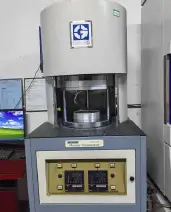
Mooney Viscometer
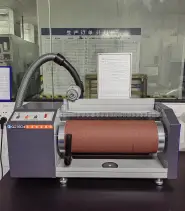
Abrasive Testing Machine
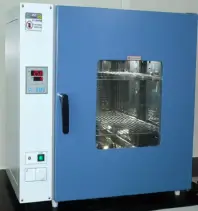
Burn-in Chamber
