
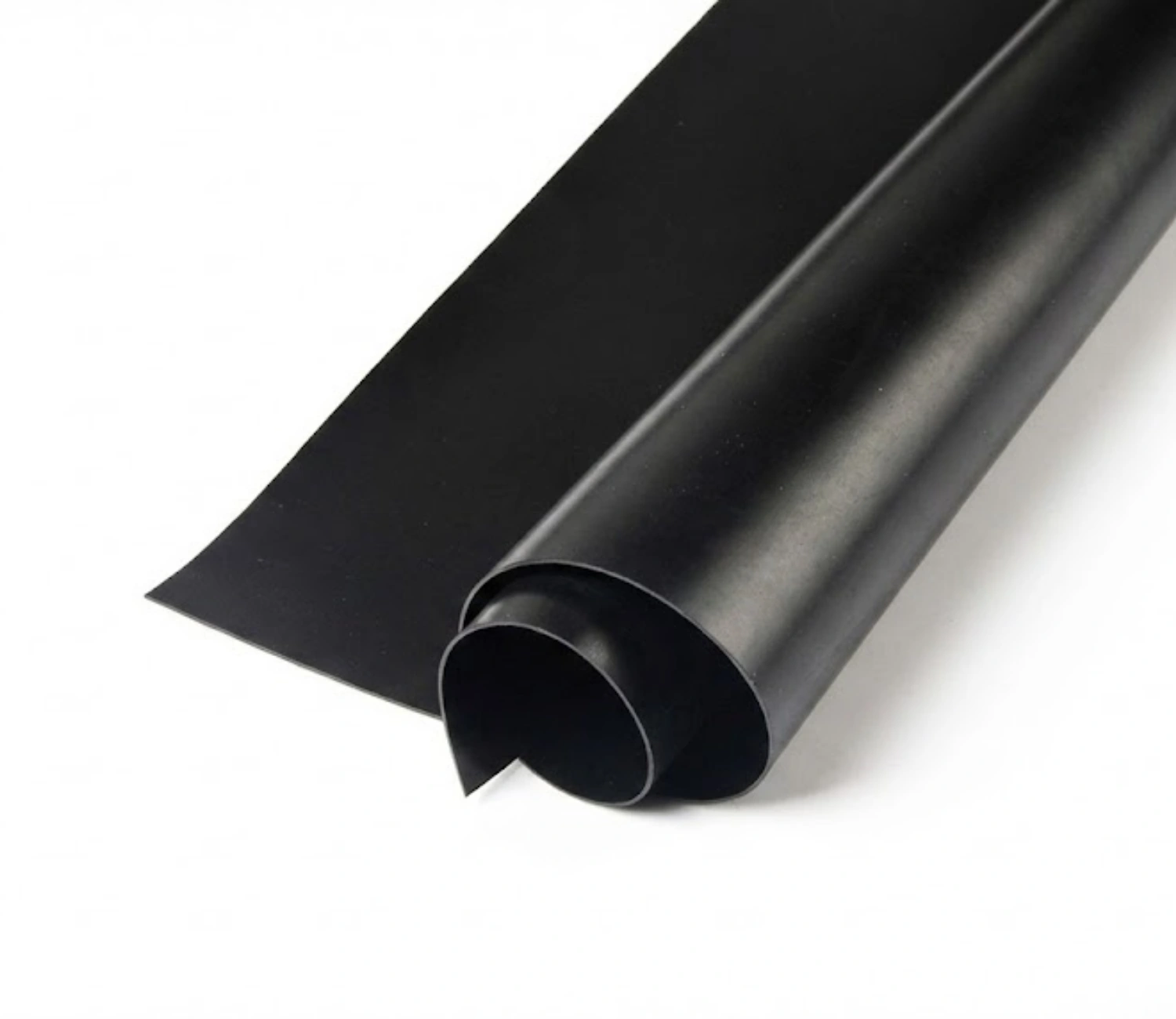
FKM Fluoroelastomer Rubber Compound
When operating temperatures exceed what EPDM, NBR, or silicone can reliably sustain, FKM fluoroelastomer is the material engineers reach for — and for good reason. Rated for continuous service at +200°C with exceptional resistance to fuels, concentrated acids, and hydraulic fluids, this FKM rubber compound covers the applications where failure simply isn’t an option. Available…
Specifications
|
Product Type: |
Rubber Compound (moldable / extrudable base compound; custom molded parts available)
|
|---|---|
|
Base Polymer: |
FKM / FPM (Fluorocarbon Rubber / Fluoroelastomer) — VF₂/HFP bipolymer and VF₂/HFP/TFE terpolymer grades
|
|
Structure: |
Solid
|
|
Color: |
Black (standard); brown, green, custom colors available
|
|
Surface Finish: |
Smooth / Matte
|
|
Standards & Compliance: |
|
|
Hardness: |
60–90 Shore A (standard: 70 ± 5 Shore A; custom grades on request)
|
|
Tensile Strength: |
≥ 10 MPa
|
|
Elongation at Break: |
≥ 150%
|
|
Tear Strength: |
≥ 20 kN/m
|
|
Recommended Service Temperature: |
-20°C to +200°C continuous; short-term excursions to +230°C
|
|
Hot Air Aging: |
200°C × 70h: Tensile strength retention ≥ 80%; Hardness change ≤ ±8 Shore A
|
|
Low‑Temperature Brittleness: |
≤ -20°C (standard); ≤ -40°C (low-temp modified grade)
|
|
Typical Applications: |
High-temperature engine shaft seals, automotive fuel system O-rings, chemical-duty static gaskets, new energy vehicle (NEV) battery pack sealing, aerospace hydraulic system seals
|
Description:
Most elastomers lose the plot somewhere between 120°C and 150°C — accelerated aging, hardening, compression-set failure. FKM doesn’t. The backbone of a fluoroelastomer chain is built around carbon-fluorine bonds, which are among the strongest in organic chemistry at approximately 544 kJ/mol. That bond energy is the reason FKM retains mechanical integrity at +200°C where EPDM would harden to the point of cracking and NBR would oxidize into something closer to hard plastic than a seal.
The fluorine content grade matters more than most buyers realize. At 66% fluorine — the bipolymer of vinylidene fluoride (VF₂) and hexafluoropropylene (HFP) — you get excellent heat and fuel resistance at a more accessible cost point. Stepping up to the 70% fluorine terpolymer, which incorporates tetrafluoroethylene (TFE) alongside VF₂ and HFP, delivers measurably better resistance to aromatic fuels, steam exposure, and concentrated acids. Neither grade is universally “better.” The right one depends on your specific chemical environment and operating cycle. That’s a conversation worth having before you lock in a compound spec.
Typical Industry Applications:
Proven performance across demanding manufacturing environments.
| Industry | Typical Use Cases |
|---|---|
| Automotive & Powertrain | Crankshaft and camshaft lip seals, turbocharger O-rings, fuel injector seals, exhaust-adjacent gaskets, transmission fluid seals |
| New Energy Vehicles (NEV / EV) | Battery pack module seals (patent-backed compound), coolant circuit O-rings, high-voltage connector seals |
| Aerospace & Defense | Hydraulic system O-rings, fuel pump seals, bleed-air duct gaskets, actuator shaft seals |
| Chemical Processing & Industrial | Pump and valve stem seals, agitator shaft seals, pipe flange gaskets for acid/solvent service |
| Oil & Gas / Downhole Equipment | High-pressure sour-gas seals, wellhead valve seals, wireline cable entry seals |
| Electronics & Semiconductor Equipment | Chamber seals for plasma etch and CVD equipment, high-vacuum flange gaskets |
Chemical Resistance Table:
| Chemical / Medium | Resistance | Notes |
|---|---|---|
| Aliphatic hydrocarbons (hexane, heptane) | ✅ Excellent | Minimal swell; preferred application for FKM |
| Aromatic hydrocarbons (toluene, xylene) | ✅ Excellent | 70% F grade preferred for prolonged exposure |
| Automotive fuels (gasoline, diesel, bio-diesel blends) | ✅ Excellent | Including E10/E15 blends |
| Mineral hydraulic oils (HM, HV grades) | ✅ Excellent | Standard service in construction and aviation hydraulics |
| Phosphate ester hydraulic fluids (Skydrol®) | ✅ Excellent | Superior to nitrile or neoprene in this medium |
| Concentrated sulfuric acid (up to 98%) | ✅ Excellent | Peroxide-cure grade recommended |
| Concentrated nitric acid (dilute to 30%) | ✓ Good | Limit exposure temperature; evaluate at application concentration |
| Engine oils and synthetic lubricants | ✅ Excellent | Including PAO and ester-based synthetics |
| Chlorinated solvents (trichloroethylene, PCE) | ✅ Excellent | Excellent volume stability |
| Ozone and UV weathering | ✅ Excellent | Fluorinated backbone; no unsaturated bonds to attack |
| Steam (low-pressure, < 150°C) | ⚠ Limited | Bisphenol-cure grade; monitor for long-term swell |
| Hot water (> 100°C) | ⚠ Limited | Peroxide-cure grade; concentration and temperature dependent |
| Ketones (MEK, acetone) | ✗ Not recommended | Significant swell; use FFKM for ketone service |
| Primary amines and ammonia | ✗ Not recommended | Causes dehydrofluorination; avoid all contact |
| Concentrated caustic (NaOH > 30%) | ✗ Not recommended | Attacks bisphenol-cured grades; consult for peroxide alternative |
In-House Quality Assurance & Testing:
At Micune Rubber, batch-to-batch consistency is guaranteed through our ISO-9001 certified Quality Management System. Every rubber compound and custom extrusion undergoes rigorous evaluation in our dedicated testing laboratory before shipment. We utilise industry-standard baseline testing, including Mooney Viscometers to measure compound viscosity and Torque Rheometers to verify exact vulcanisation characteristics. This ensures every material formulation strictly adheres to your required specifications and processing parameters.
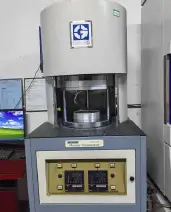
Mooney Viscometer
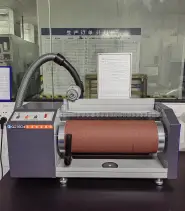
Abrasive Testing Machine
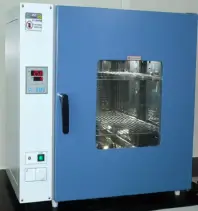
Burn-in Chamber
