
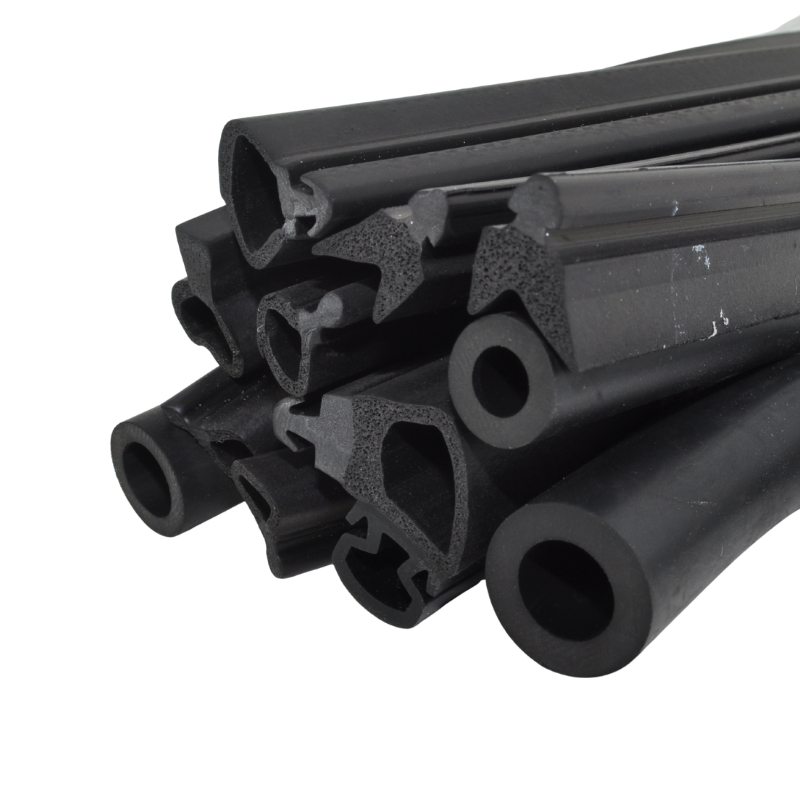
EPDM Rubber Seal Strip
A single car door makes three simultaneous demands on its perimeter seal: resistance to compression set through thousands of open-close cycles, a reliable wipe barrier against wind and water ingress, and an acoustic layer that keeps road noise out of the cabin. Automotive-grade co-extruded EPDM rubber seal strips resolve all three zones in one continuous…
Specifications
|
Product Type: |
Extruded EPDM Seal Strip / Automotive Weather Strip
|
|---|---|
|
Base Polymer: |
Ethylene Propylene Diene Monomer (EPDM)
|
|
Structure: |
Solid / Foamed (Microcellular) / Co-extruded Solid+Foam Composite
|
|
Color: |
Black (standard); custom colors per specification
|
|
Surface Finish: |
Smooth; flocked (velvet); PU or silicone-spray coated
|
|
Standards & Compliance: |
|
|
Hardness: |
Solid Section: 55 ± 5 Shore A (customizable: 40–75 Shore A), Foam Section: 20–35 Shore A (microcellular, density 0.4–0.7 g/cm³)
|
|
Tensile Strength: |
≥ 10 MPa
|
|
Elongation at Break: |
≥ 300%
|
|
Tear Strength: |
≥ 25 kN/m
|
|
Recommended Service Temperature: |
-40°C to +120°C (continuous); up to +150°C short-term
|
|
Hot Air Aging: |
100°C × 72h: hardness change ≤ ±8 Shore A; tensile retention ≥ 80%
|
|
Low‑Temperature Brittleness: |
Passes at -40°C
|
|
Typical Applications: |
Car door perimeter seal, window channel strip, trunk lid gasket, engine hood seal, body weather strip, A/B/C-pillar seal
|
Description:
EPDM’s backbone is fully saturated — unlike NR or SBR, no double bonds exist in the main chain to attract ozone or UV attack. That structural fact is precisely why it dominates automotive exterior sealing. A door perimeter seal lives outdoors, cycling between -40°C winter cold and the 80–100°C thermal load of sun-baked bodywork; EPDM holds its elastic character through that entire range, returning to shape after thousands of door closures without the progressive compression set that ultimately admits wind and water. The diene termonomer — typically ENB (5-ethylidene-2-norbornene) — provides cross-linking sites without compromising main-chain saturation. Higher ENB content accelerates cure kinetics and tightens compression-set resistance, a parameter Micune’s compound engineers calibrate specifically to the load geometry of each sealing position: door perimeters, trunk lids, and hood seals each impose different closure forces and dwell times.
Typical Industry Applications:
Proven performance across demanding manufacturing environments.
| Industry | Typical Use Cases |
|---|---|
| Automotive & Motorcycle | Door perimeter seals, window run-channel strips, trunk lid and engine hood gaskets, A/B/C-pillar weather strips, sunroof seals, door-sill protective strips |
| Construction & Architecture | Curtain wall glazing compression gaskets, aluminum window frame seals, expansion joint filler strips, façade panel edge trim |
| Home Appliances | Washing machine door gaskets, refrigerator cabinet trim seals, oven door weather strips |
| Electronics & Industrial Machinery | Electrical enclosure IP-rating gaskets, outdoor control panel door seals, junction box weatherproofing strips |
Chemical Resistance Table:
| Chemical / Medium | Resistance | Notes |
|---|---|---|
| Water / Moisture | ✅ Excellent | Primary driver of automotive exterior seal selection |
| Steam (≤ 120°C) | ✅ Excellent | Suitable for engine-bay and industrial exposure |
| Ozone | ✅ Excellent | Saturated backbone is inherently ozone-inert |
| UV / Solar Radiation | ✅ Excellent | Carbon black-filled grades resist photodegradation |
| Brake Fluid (glycol-based DOT 3/4) | ✅ Excellent | No swelling under typical automotive contact conditions |
| Engine Coolant (ethylene glycol/water) | ✅ Excellent | Standard coolant formulations pose no degradation risk |
| Windshield Washer Fluid (aqueous alcohol) | ✅ Excellent | Alcohol-water blends cause no material degradation |
| Dilute Acids (H₂SO₄, HCl < 10%) | ✓ Good | Acceptable for incidental contact; avoid prolonged immersion |
| Dilute Alkalis (NaOH < 20%) | ✓ Good | Good resistance under standard service conditions |
| Alcohols (methanol, ethanol) | ✓ Good | Acceptable short-term or cyclic exposure |
| Mineral Engine Oil / Hydraulic Oil | ⚠ Limited | Swelling occurs with prolonged contact; NBR or FKM preferred for oil-seal positions |
| Ketones (MEK, acetone) | ⚠ Limited | Moderate attack; continuous immersion not recommended |
| Concentrated Acids | ⚠ Limited | Elevated concentration and temperature increase degradation risk |
| Aliphatic Hydrocarbons / Gasoline | ✗ Not recommended | Significant swelling; select NBR for fuel-contact applications |
| Aromatic Solvents (toluene, xylene) | ✗ Not recommended | Severe swelling; FKM required for aromatic solvent service |
In-House Quality Assurance & Testing:
At Micune Rubber, batch-to-batch consistency is guaranteed through our ISO-9001 certified Quality Management System. Every rubber compound and custom extrusion undergoes rigorous evaluation in our dedicated testing laboratory before shipment. We utilise industry-standard baseline testing, including Mooney Viscometers to measure compound viscosity and Torque Rheometers to verify exact vulcanisation characteristics. This ensures every material formulation strictly adheres to your required specifications and processing parameters.
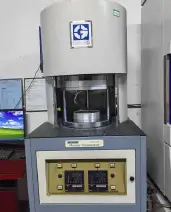
Mooney Viscometer
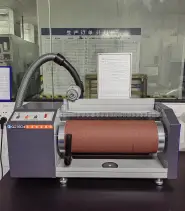
Abrasive Testing Machine
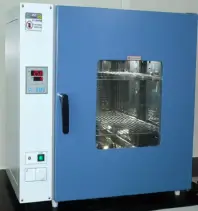
Burn-in Chamber
