
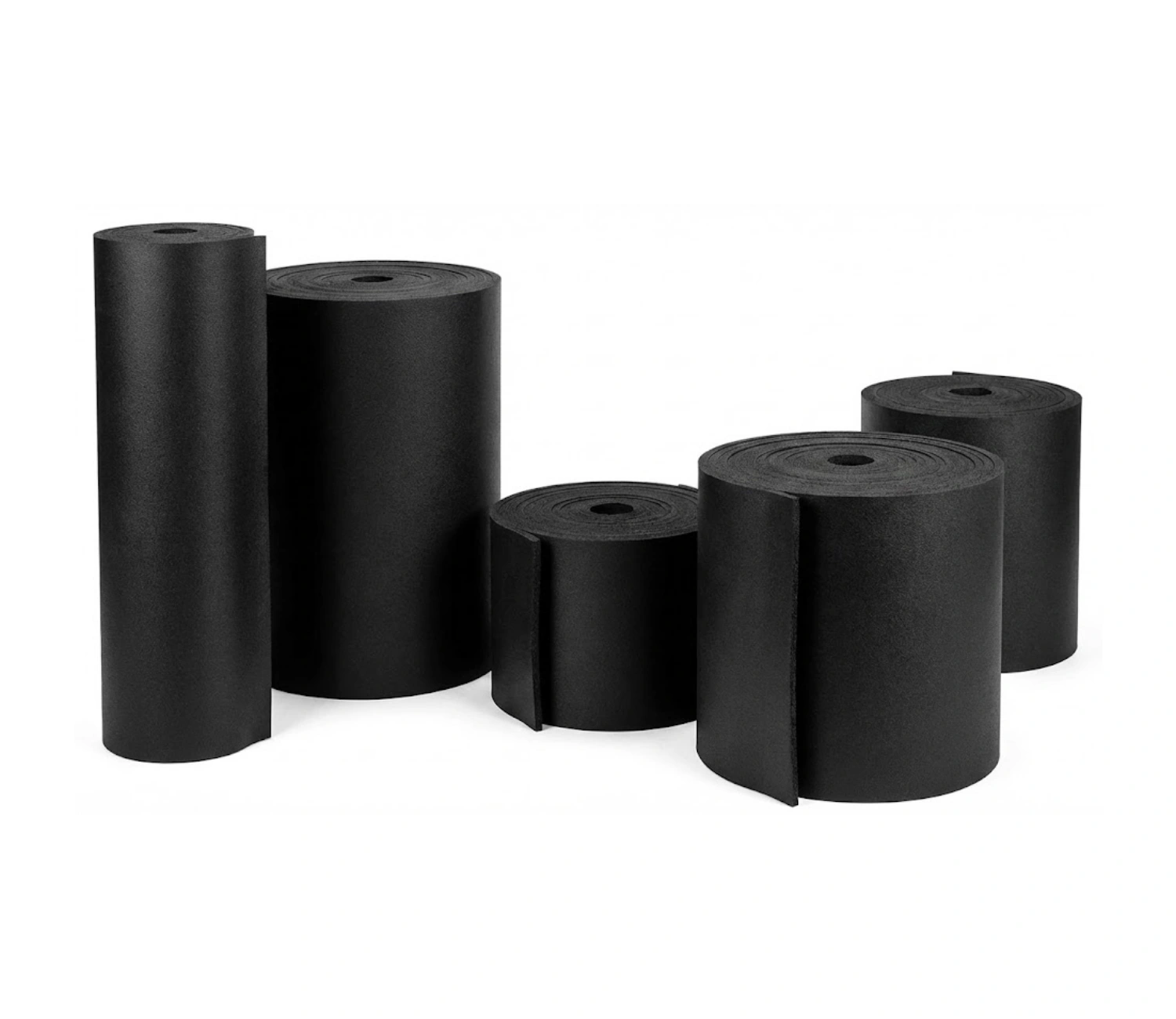
CR Neoprene Rubber Compound
No single elastomer handles the full range of field conditions quite like chloroprene rubber. Micune’s CR (neoprene) rubber compound delivers a rare combination of oil tolerance, ozone resistance, and self-extinguishing behavior in one formulation — making it the go-to material where both weathering and intermittent chemical contact occur simultaneously. Compounded in-house from a 400+ grade…
Specifications
|
Product Type: |
Custom-compounded CR Rubber / Extruded Sealing Strip / Molded Gasket / Rubber Hose
|
|---|---|
|
Base Polymer: |
CR (Chloroprene Rubber / Neoprene — Polychloroprene)
|
|
Structure: |
Solid / Foamed / Composite (per application)
|
|
Color: |
Black (standard); gray, red, custom colors available
|
|
Surface Finish: |
Smooth / Matte / Flocked / Coated
|
|
Standards & Compliance: |
|
|
Hardness: |
40–75 Shore A (standard formulations 50–65 Shore A; ± 5 Shore A tolerance)
|
|
Tensile Strength: |
≥ 10 MPa
|
|
Elongation at Break: |
≥ 250%
|
|
Tear Strength: |
≥ 25 kN/m
|
|
Recommended Service Temperature: |
-35°C to +120°C (short-term excursions to +130°C)
|
|
Hot Air Aging: |
70°C × 72h: Hardness change ≤ ±8 Shore A; tensile retention ≥ 75%
|
|
Low‑Temperature Brittleness: |
≤ -35°C (standard grade); ≤ -45°C available on request
|
|
Typical Applications: |
Weatherstripping, marine dock seals, automotive cable jacketing, industrial hoses, HVAC duct seals, construction facade gaskets
|
Description:
Chloroprene rubber occupies a unique position among synthetic elastomers. Its backbone incorporates chlorine atoms directly into the polymer chain — and that one structural fact explains most of CR’s performance profile. The chlorine substituent limits chain mobility in the same way it limits combustion: oxygen has a harder time attacking a chlorinated chain, which translates to self-extinguishing behavior in flame and inherently better weathering resistance compared to diene rubbers like SBR or NR. This is not an additive-dependent property. It’s baked into the molecular structure itself.
That same polarity also gives CR meaningful resistance to petroleum-based oils and greases — not FKM-level resistance, but sufficient for fuel hose jacketing, marine equipment seals, and general hydraulic environments where brief or incidental oil contact is more realistic than continuous immersion. The result is a material that no single-property specialist — not EPDM, not NBR, not silicone — can fully replicate wherever both ozone/UV weathering and oil contact coexist in the same application.
Ozone resistance is similarly intrinsic. EPDM’s saturated backbone gives it superior ozone performance in purely outdoor weathering service, but CR’s chlorinated structure handles ozone well enough for the vast majority of weatherstripping, expansion joint, and marine seal applications — while also tolerating the oil and fuel exposures that would rapidly degrade EPDM. That balance is CR’s real selling point.
Typical Industry Applications:
Proven performance across demanding manufacturing environments.
| Industry | Typical Use Cases |
|---|---|
| Automotive & Motorcycle | Door and trunk weatherstripping, fuel hose jacketing, battery compartment seals, wiring harness grommets, vibration-damping mounts |
| Marine & Offshore | Dock bumper seals, hatch cover gaskets, cable entry seals, bilge pump hose, mooring equipment seals |
| Construction & Architecture | Curtain wall expansion joint seals, window and door perimeter strips, facade weatherstripping, concrete joint seals |
| HVAC & Refrigeration | Duct connection seals, refrigerant hose jackets, fan vibration mounts, access panel gaskets |
| Electronics & Electrical | Cable and wire jacket insulation, electrical panel gaskets, conduit seals, EMC shielding strips |
| Industrial Machinery | Conveyor belt edge seals, equipment access door gaskets, pump and compressor hose assemblies, anti-vibration pads |
Chemical Resistance Table:
| Chemical / Medium | Resistance | Notes |
|---|---|---|
| Petroleum-based oils (mineral oil, lubricants) | ✓ Good | Suitable for incidental contact and moderate immersion; not for continuous high-concentration service |
| Hydraulic fluids (petroleum-based) | ✓ Good | Standard hydraulic systems; evaluate at specific fluid concentrations |
| Ozone | ✓ Good | Chlorinated backbone provides inherent ozone resistance; superior to NR and SBR |
| UV / Sunlight | ✓ Good | Outperforms NR; appropriate for outdoor weatherstripping and facade seals |
| Weathering (rain, humidity, oxidation) | ✓ Good | Core performance advantage of CR; stable long-term in outdoor exposure |
| Dilute acids (weak concentrations) | ✓ Good | Suitable for mild acid splash; not for concentrated or oxidizing acids |
| Dilute alkalis | ✓ Good | Washing solutions, dilute caustic environments |
| Water / Steam (up to 100°C) | ✓ Good | Excellent water resistance; limited steam exposure acceptable |
| Gasoline / Fuels | ⚠ Limited | Acceptable as jacket material; not suitable for fuel immersion |
| Aromatic hydrocarbons (toluene, xylene) | ✗ Not recommended | Significant swelling; substitute FKM for continuous aromatic solvent contact |
| Ketones (MEK, acetone) | ✗ Not recommended | Rapid degradation; use EPDM or FKM for ketone service |
| Concentrated oxidizing acids (nitric, sulfuric >30%) | ✗ Not recommended | Aggressive attack; FKM or PTFE-lined products required |
| Flames / Ignition sources | ✓ Good | Self-extinguishing; does not sustain combustion — key advantage over NR, SBR, EPDM |
| Ammonia (dilute aqueous) | ⚠ Limited | Evaluate at specific concentration and temperature; test recommended for long-term service |
In-House Quality Assurance & Testing:
At Micune Rubber, batch-to-batch consistency is guaranteed through our ISO-9001 certified Quality Management System. Every rubber compound and custom extrusion undergoes rigorous evaluation in our dedicated testing laboratory before shipment. We utilise industry-standard baseline testing, including Mooney Viscometers to measure compound viscosity and Torque Rheometers to verify exact vulcanisation characteristics. This ensures every material formulation strictly adheres to your required specifications and processing parameters.
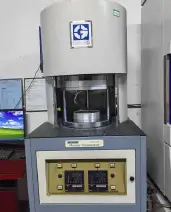
Mooney Viscometer
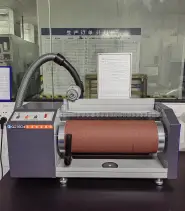
Abrasive Testing Machine
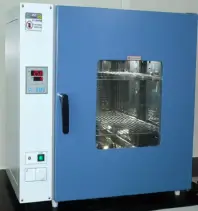
Burn-in Chamber
