
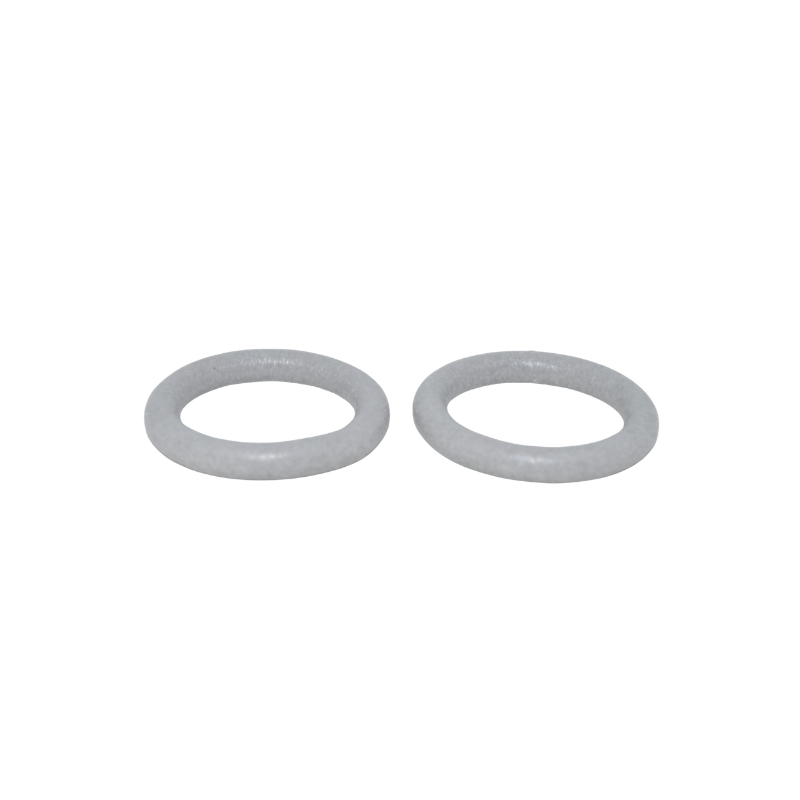
EPDM Flat Gasket
A flat gasket is the most fundamental sealing geometry in fluid systems — and EPDM is its most capable partner wherever water, steam, or outdoor exposure is involved. Engineered for water inlet fittings, tap connectors, pipe flanges, and pump housings, these EPDM flat gaskets and washer rings deliver reliable compression sealing across a 50–70 Shore…
Specifications
|
Product Type: |
Flat Gasket / Washer Ring
|
|---|---|
|
Base Polymer: |
Ethylene Propylene Diene Monomer (EPDM)
|
|
Structure: |
Solid flat; annular (washer) geometry
|
|
Color: |
Black (standard); gray, white, custom on request
|
|
Surface Finish: |
Smooth, calendered; lathe-cut: square-edge precision finish
|
|
Standards & Compliance: |
|
|
Hardness: |
50–70 Shore A (±5)
|
|
Tensile Strength: |
≥ 8 MPa
|
|
Elongation at Break: |
≥ 280%
|
|
Tear Strength: |
≥ 20 kN/m
|
|
Recommended Service Temperature: |
−45°C to +150°C
|
|
Hot Air Aging: |
120°C × 72h: hardness change ≤ ±8 Shore A; tensile change ≤ −20%
|
|
Low‑Temperature Brittleness: |
≤ −45°C
|
|
Typical Applications: |
Water inlet flat washer, tap connector gasket, pipe flange ring seal, pump housing flat gasket, appliance fitting seal
|
Description:
EPDM’s fundamental advantage for flat gaskets is structural: its saturated polymer backbone — ethylene and propylene units with a small percentage of diene monomer as crosslink sites — leaves virtually no reactive double bonds exposed to the sealing medium. In flat gasket geometry, where the sealing face is permanently in contact with the fluid, that matters more than it does for covered profiles or enclosed O-rings. Ozone, UV radiation, and water vapor have nothing to attack.
For water-contact applications, EPDM retains mechanical properties reliably through extended hot-water immersion at up to 150°C — hydrothermal stability that most commodity elastomers cannot match. At 50–70 Shore A, the compound is firm enough to resist cold-flow under bolt-load or spring-clip compression, yet compliant enough to conform to minor surface irregularities on cast or machined fittings. Reliable. Even at −45°C.
Typical Industry Applications:
Proven performance across demanding manufacturing environments.
| Industry | Typical Use Cases |
|---|---|
| Automotive & Motorcycle | Coolant hose end washers, radiator drain plug gaskets, battery vent flat seals |
| Construction & Architecture | Pipe flange ring seals, faucet body flat washers, water meter connector gaskets |
| Home Appliances | Washing machine inlet valve washers, dishwasher water inlet flat gaskets, steam iron water-tank seals |
| Lighting & LED | Outdoor luminaire housing face seals (weatherproofing, not direct water-contact) |
| Electronics & Industrial Machinery | Pump housing flat gaskets, hydraulic manifold face seals, coolant circuit flat washers |
Chemical Resistance Table:
| Chemical / Medium | Resistance | Notes |
| Cold water (≤ 40°C) | ✅ Excellent | Long-term immersion; minimal swell |
| Hot water (40–100°C) | ✅ Excellent | Preferred elastomer for potable water fittings |
| Steam (low pressure, ≤ 0.5 MPa) | ✅ Excellent | Stable up to 150°C with peroxide cure |
| Steam (high pressure, > 1 MPa) | ✓ Good | Temperature-dependent; verify against compound grade |
| Ozone & UV | ✅ Excellent | Saturated backbone; outdoor service rated |
| Dilute sulfuric acid (< 30%) | ✓ Good | Suitable for drain and wastewater contact |
| Dilute sodium hydroxide | ✓ Good | Compatible at typical domestic concentrations |
| Ethanol / isopropanol | ✓ Good | Minor swell possible at high concentrations |
| Ketones (acetone, MEK) | ⚠ Limited | Moderate swell; short incidental contact only |
| Vegetable / animal oils | ✓ Good | Suitable for food-adjacent appliance applications |
| Petroleum mineral oil | ✗ Not recommended | Significant swelling; specify NBR or FKM instead |
| Gasoline / diesel fuel | ✗ Not recommended | Not suitable for hydrocarbon fuel sealing |
| Aromatic solvents (toluene, xylene) | ✗ Not recommended | Severe swelling; incompatible |
| Chlorinated solvents (TCE, DCM) | ✗ Not recommended | Aggressive attack; no contact |
| Phosphate ester hydraulic fluid | ✅ Excellent | EPDM preferred over NBR for this fluid class |
In-House Quality Assurance & Testing:
At Micune Rubber, batch-to-batch consistency is guaranteed through our ISO-9001 certified Quality Management System. Every rubber compound and custom extrusion undergoes rigorous evaluation in our dedicated testing laboratory before shipment. We utilise industry-standard baseline testing, including Mooney Viscometers to measure compound viscosity and Torque Rheometers to verify exact vulcanisation characteristics. This ensures every material formulation strictly adheres to your required specifications and processing parameters.
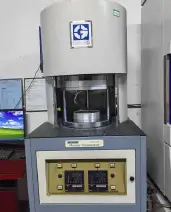
Mooney Viscometer
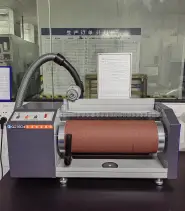
Abrasive Testing Machine
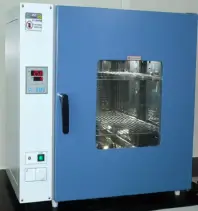
Burn-in Chamber
