
Industry Focus
Automotive Rubber Compounds & Sealing Solutions
Automotive applications impose conditions that expose rubber components to simultaneous thermal cycling between −40°C and +150°C, continuous ozone and UV radiation, contact with fuels, oils, and glycol-based coolants, mechanical vibration, and long-term compression loading. Each of these factors degrades elastomer performance through distinct chemical and physical mechanisms — oxidative chain scission, plasticizer extraction, compression set accumulation, and dynamic fatigue.
General-purpose rubber compounds are not engineered to satisfy multiple simultaneous degradation mechanisms. Automotive OEM and Tier supplier specifications define performance requirements by application zone — exterior sealing, fluid-contact sealing, and under-hood heat exposure — and each zone demands a different elastomer system with compound-level formulation control. Micune produces automotive rubber compounds from raw polymer through mixed batch, with in-house rheology, hardness, and tensile validation before shipment.
EPDM Weather Sealing
NBR Fuel Resistance
High-Temp FPM & ACM
RoHS & PAHs Support
OEM / Tier Supplier Applications
Request a Sample or Datasheet
Why Material Selection Matters
Automotive Rubber Applications Require Elastomer-Specific Compounding
Exterior body sealing and under-hood sealing present fundamentally different chemical environments. Door seals, weatherstripping, and trunk seals are exposed to ozone, UV radiation, acid rain, and thermal cycling, conditions where EPDM’s saturated backbone provides decades of weathering resistance. These same conditions would be irrelevant for a crankshaft seal exposed to hot oil at +130°C, where ACM or FPM (Viton) is the appropriate elastomer.
NBR remains the standard choice for oil-contact and fuel-contact components — O-rings, shaft seals, pump diaphragms — where acrylonitrile (ACN) content must be matched to the specific fluid and low-temperature requirement. A 41% ACN compound resists swelling in aggressive aromatic fuels but loses low-temperature flexibility, critical for cold-climate fuel system seals. A 28% ACN compound maintains flexibility at −35°C but accepts some trade-off in fuel swell resistance. This selection logic is invisible in a generic “NBR seal” specification and becomes visible only through application-specific compounding.
HNBR extends NBR’s heat and chemical resistance for dynamic sealing in power steering and transmission systems. ACM handles continuous hot oil exposure where NBR would degrade. FPM (Viton) anchors the high-temperature end — fuel injector seals, turbocharger O-rings, and exhaust-adjacent components where operating temperatures exceed the capability of any hydrocarbon elastomer.
OEM and Tier 1 suppliers specifying rubber compounds under ASTM D2000 or equivalent customer-specific standards require that compound performance be traceable to formulation, mixing records, and production batch test data. Micune’s 26 internal mixing lines, MDR rheometer, and Mooney viscometer support this documentation chain from compound development through production release.
Application Engineering
Key Automotive Rubber Applications
Door and Window Seals
Automotive door seals maintain cabin sealing against water ingress, wind noise, and dust across an expected vehicle service life exceeding ten years. The compound must retain its compression set recovery after sustained dynamic loading from door closing cycles and thermal expansion differentials. EPDM — formulated with ENB diene content ≥5% for peroxide curability and Shore A hardness typically in the 50–65 range — is the industry-standard material for this application. Its saturated main chain resists ozone cracking and UV degradation without carbon-black UV screens.
Weatherstripping and Trunk Seals
Extruded EPDM profiles for trunk lids, sunroofs, and hood perimeters require consistent cross-sectional geometry and predictable compression-deflection characteristics over the vehicle’s lifetime. Sponge EPDM co-extruded with solid EPDM is common for bulb-seal profiles where low closure force is required alongside reliable waterproofing. Micune’s 6 extrusion lines produce weatherstrip profiles to customer cross-section drawings, with compound hardness and density validated against production records. These automotive rubber extrusions directly support OEM door seal programs.
Coolant and Radiator Hoses
Coolant system hoses operate in an environment of elevated temperature (up to 130°C continuous), ethylene glycol–water coolant mixture, and mechanical vibration from engine movement. EPDM is the preferred material due to its inherent resistance to glycol-based fluids, ozone, and heat aging. Tensile strength above 10 MPa and elongation at break exceeding 300% are standard performance targets for hose compound qualification. Micune’s EPDM coolant hose compounds support both tube extrusion and molded elbow configurations for automotive thermal management systems.
Fuel System O-Rings and Gaskets
Fuel-contact sealing demands resistance to swelling and extraction in aromatic hydrocarbons, ethanol blends, and increasingly in E10–E85 fuels. NBR with 33–41% ACN content is the established base material, with compound formulation optimized to balance fuel swell resistance against low-temperature flexibility requirements per the application climate zone. For direct fuel-injection systems and hybrid architectures where fuel contact temperatures rise above 100°C, FPM provides the chemical resistance margin that NBR cannot maintain at temperature.
Under-Hood Oil-Resistant Seals
Oil pan gaskets, valve cover seals, and camshaft end seals are exposed to hot oil, thermal cycling, and mechanical movement. ACM (polyacrylate rubber) is selected for applications where continuous oil contact at temperatures between 150°C and 175°C rules out NBR. For applications requiring both oil resistance and dynamic performance — power steering seals, transmission shaft seals — HNBR offers a measurable improvement over standard NBR in heat aging and oil-swell resistance without the cost of FPM. Compound hardness for molded seals in these applications typically falls in the 70–80 Shore A range.
Grommets, Bushings, and Vibration Dampers
Body-to-frame grommets, engine mount isolation pads, and suspension bushings absorb vibration across a wide frequency range. NR and NR/SBR blends are used where high dynamic stiffness ratio and low hysteresis are needed. EPDM is preferred for firewall grommets and cable entry seals exposed to ozone and the under-hood thermal environment. These automotive rubber components require controlled hardness uniformity across production batches — Micune validates Shore A ±3 points per batch as a standard production acceptance criterion.
Material Engineering
Recommended Materials for Automotive Rubber Parts
The table below summarizes the five primary elastomer platforms used in automotive sealing and fluid-management applications. Selection is driven by the dominant environmental stressor at the application location, not by cost alone.
| Material | Best-Fit Applications | Performance Strengths | Selection Logic |
|---|---|---|---|
| EPDM | Door seals, weatherstripping, trunk seals, coolant hoses, firewall grommets | Ozone and UV resistance; coolant and steam resistance; wide service temperature range (−50°C to +150°C); good compression set recovery | First choice for exterior sealing wherever oil and fuel contact is absent. ENB diene content and vulcanization system must be matched to the extrusion or molding process. |
| NBR | Fuel system O-rings, oil seals, hydraulic system seals, pump gaskets | Oil and fuel swell resistance directly proportional to ACN content; cost-effective in 28–41% ACN range; good abrasion resistance | ACN content must be selected against fuel type and low-temperature requirement. Not suitable where continuous temperatures exceed 120°C or where ozone exposure is significant. |
| FPM / Viton | Fuel injector seals, turbocharger O-rings, exhaust-adjacent seals, chemical-resistant shaft seals | Continuous service to 200°C; resistance to aromatic fuels, engine oils, and transmission fluids; very low compression set at temperature | Specified when temperature or chemical severity exceeds NBR’s capability. Higher compound cost is offset by extended service life in extreme environments. |
| ACM | Transmission seals, valve stem seals, oil pan gaskets, hot oil–contact static seals | Excellent oil and ozone resistance; continuous service to 175°C; suitable for hot automatic transmission fluid (ATF) environments | Selected over NBR when continuous oil contact temperatures exceed 130°C. More limited low-temperature performance than NBR; not suitable for cold-climate dynamic sealing. |
| HNBR | Power steering seals, belt tensioner seals, dynamic seals in hybrid system environments | Higher heat resistance than standard NBR (to 150°C continuous); oil resistance comparable to high-ACN NBR; better dynamic fatigue resistance | Bridges the gap between NBR and FPM in applications where temperature demand is rising but FPM cost is not yet justified. Suitable for demanding dynamic sealing under ASTM D2000 HK or higher classifications. |
Product Discovery
Featured Products for Automotive Applications
The following compounds are produced and stocked at Micune’s Guangzhou facility. Each is available as a mixed batch or extruded/molded form. Contact us for Mooney viscosity, MDR cure data, and physical test results.
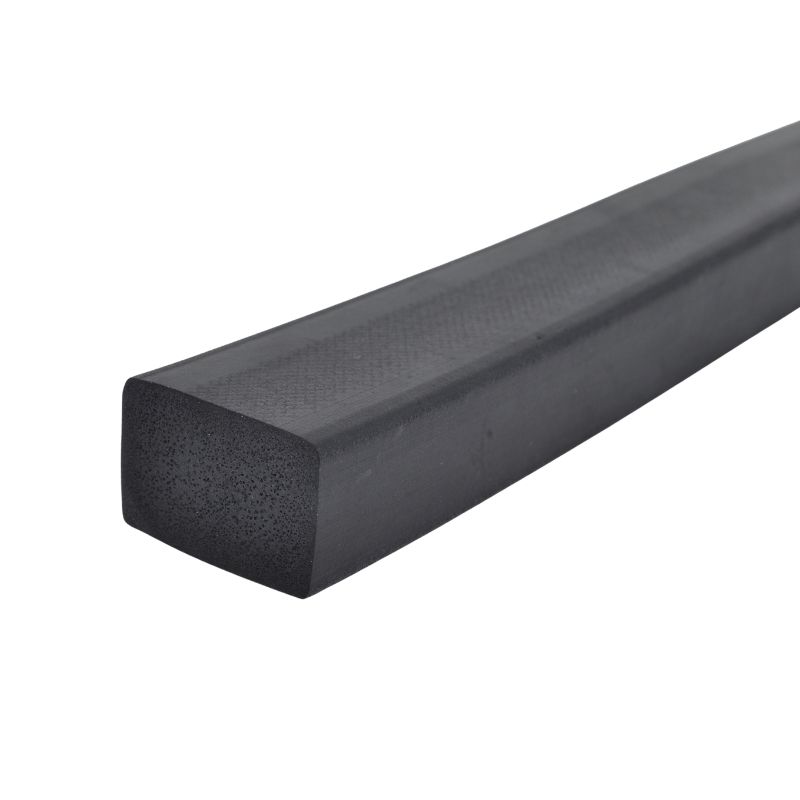
EPDM Automotive Weatherstrip
Extruded EPDM profile compound for exterior door, window, and trunk sealing systems. Formulated for consistent compression set recovery and long-term ozone resistance under automotive cycling conditions.
Best for: Weather resistance, ozone resistance, and long-term compression recovery in door and window seal profiles
View Product
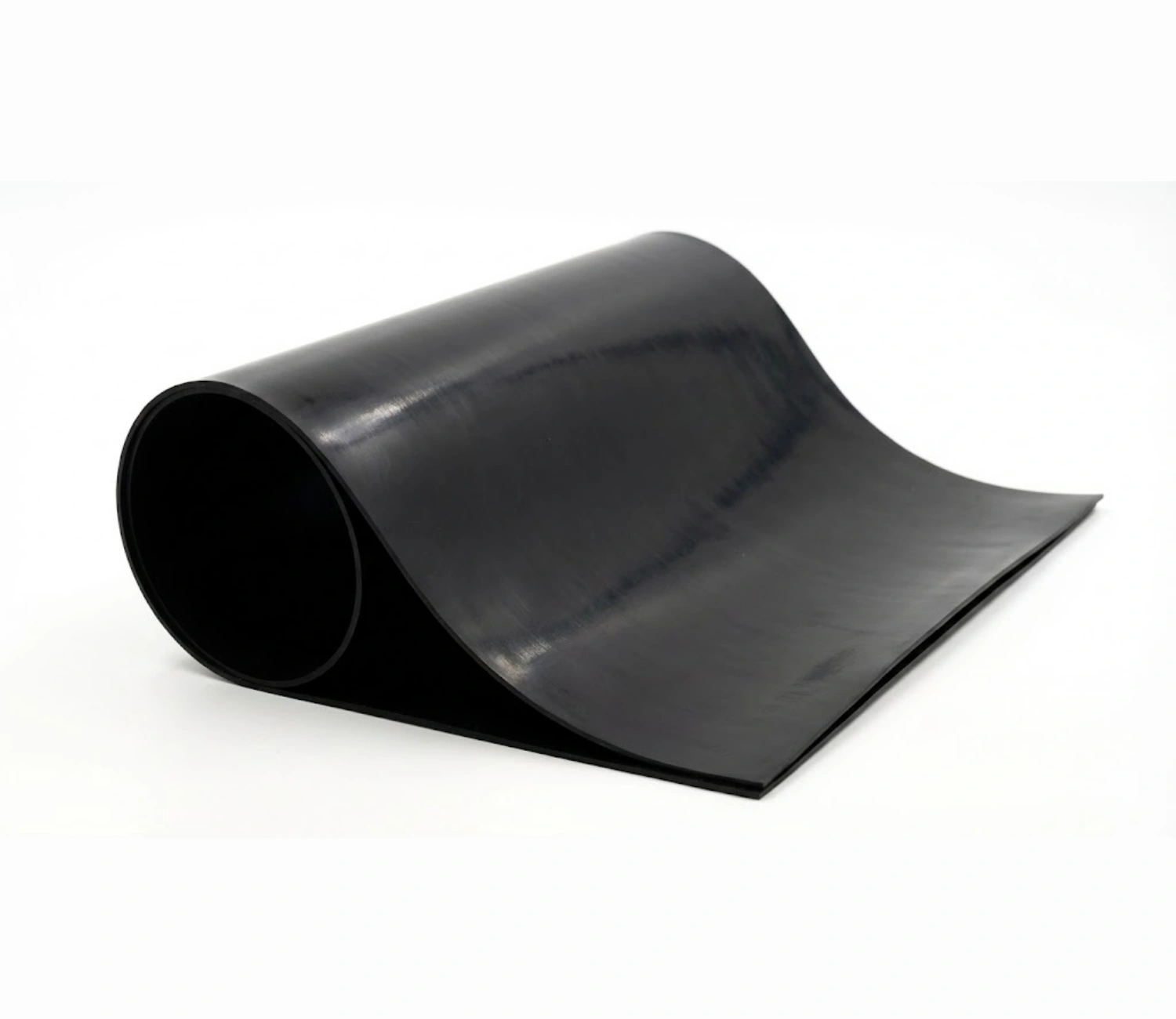
NBR Fuel System Sealing Compound
Nitrile rubber compound designed for molded seals and gaskets in direct contact with oil and fuel. ACN content calibrated to balance fuel-swell resistance and low-temperature flexibility for fuel system applications.
Best for: Fuel-contact O-rings, pump gaskets, and molded sealing parts in automotive fuel systems
View Product
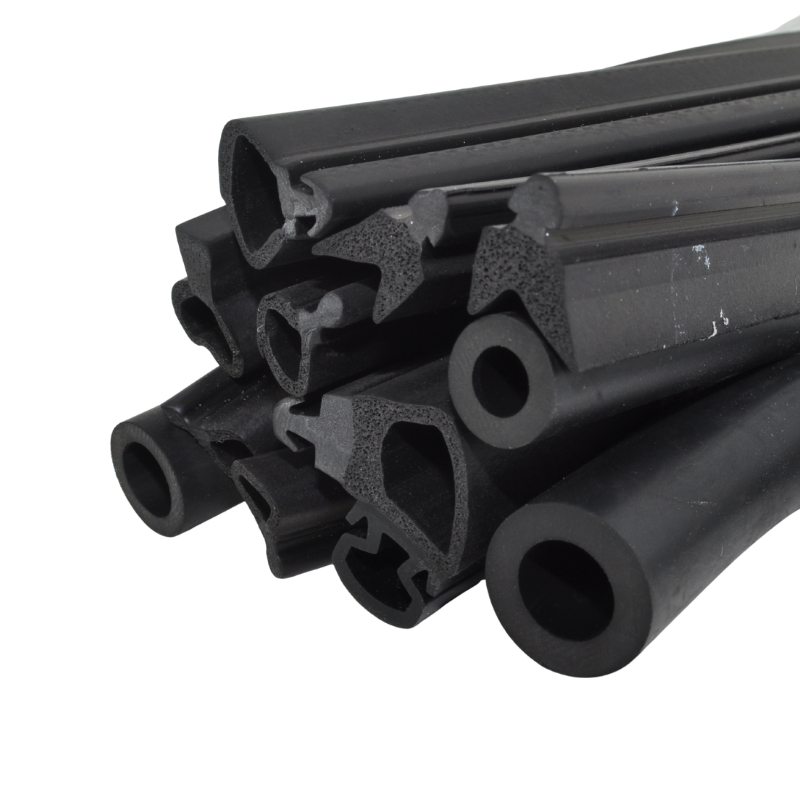
EPDM Coolant Hose Compound
Heat- and glycol-resistant EPDM compound developed for hose extrusion and molded coolant components. Validated for service in ethylene glycol–water coolant mixtures at continuous temperatures up to 130°C.
Best for: Radiator hoses, thermostat housing hoses, and molded coolant transfer components
View Product
Compliance & Testing
Validation for Automotive End Uses
Automotive rubber parts exported to Europe and North America require chemical substance compliance documentation alongside dimensional and physical test data. Micune maintains SGS-issued third-party test reports for its EPDM compound line and supports customer-specific material qualification processes.
RoHS Compliance
Micune’s EPDM compound has been tested by SGS under report CANEC26004724721. All ten restricted substances — Pb, Hg, Cd, Cr(VI), PBB, PBDE, and the four restricted phthalates (DEHP, BBP, DBP, DIBP) — were reported as ND (not detected) for the tested sample. This supports RoHS compliance documentation for automotive rubber parts exported to EU markets.
PAHs Compliance
Under SGS report CANEC26004724739, the same EPDM compound was tested against the AfPS GS 2019:01 PAHs requirements. All 15 polycyclic aromatic hydrocarbons in the test panel were reported as ND. This supports compliance documentation for automotive rubber seals and extruded profiles supplied to European OEM and Tier programs with skin-contact restrictions.
In-House Physical Testing
Micune’s in-house test laboratory covers the measurements required for automotive compound release: Mooney viscosity (ML 1+4, 100°C) for batch-to-batch consistency; Moving Die Rheometer (MDR-2000E) for cure time and torque data; tensile strength and elongation at break per ISO 37; Shore A hardness; low-temperature brittleness; and specific gravity. Test records are available per batch upon request.
ASTM D2000 & Customer Spec Support
Micune compounds can be developed and validated against ASTM D2000 type and class requirements, as well as against customer-specific automotive qualification standards. Material grades are adjustable — hardness range, tensile requirements, compression set limits, and fluid resistance — to match the application specification provided by the buyer or engineering team.
Submit Your Automotive Rubber Application
To recommend the right compound, we need the application details: component type, primary fluid exposure, operating temperature range, hardness target, relevant standard (ASTM D2000, internal OEM spec, or equivalent), and annual volume estimate. This lets us identify the correct elastomer system and confirm available test data from our existing compound inventory.
Send Application DetailsStart Your Custom Project Today!
Looking to optimise your supply chain? Our engineering team can support your needs for custom rubber compounding, moulded parts, or extrusions. Please submit your requirements below to receive a prompt, factory-direct quote and technical consultation.