
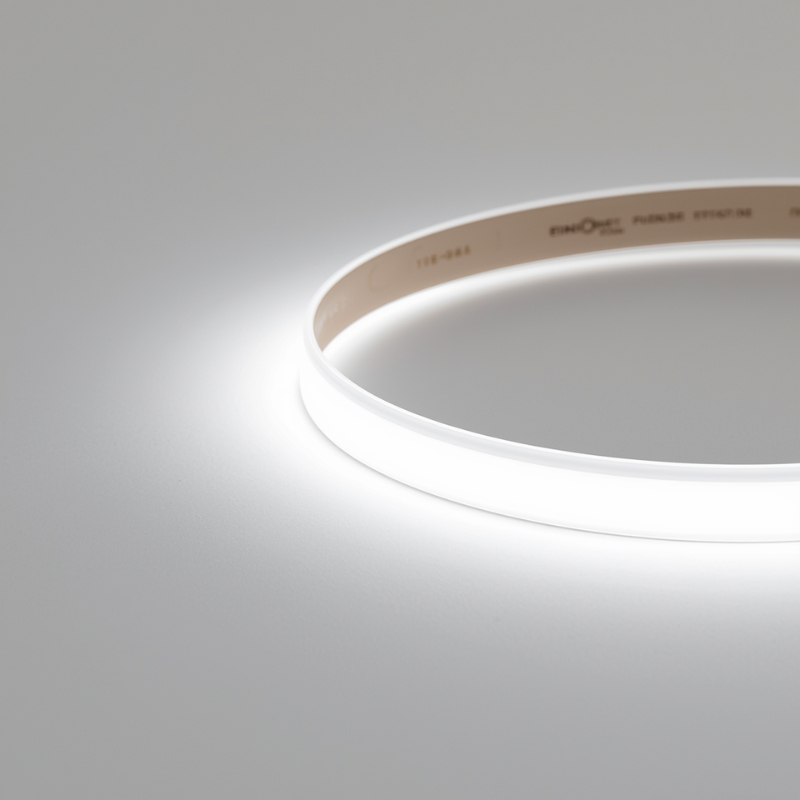
VMQ Silicone LED Strip Cover
UV degradation is the leading reason silicone LED strip covers fail outdoors — inferior grades yellow and embrittle within one to two seasons, scattering color casts and masking luminaire brightness. Extruded from UV-stabilized VMQ (vinyl methyl silicone), these LED silicone profiles hold optical clarity and dimensional integrity from -60°C to +200°C without the photodegradation that…
Specifications
|
Product Type: |
Extruded silicone LED strip cover / LED neon flex profile / waterproof diffuser sleeve
|
|---|---|
|
Base Polymer: |
Vinyl methyl silicone (VMQ)
|
|
Structure: |
Solid-wall extrusion; single-color or dual-color co-extrusion (e.g. black base / white diffuser face)
|
|
Color: |
Transparent (clear), milky white (frosted diffuser), full black, custom color per Pantone/RAL ref
|
|
Surface Finish: |
Smooth gloss (transparent grades); matte optical diffuser (milky-white grades)
|
|
Standards & Compliance: |
|
|
Hardness: |
40–70 Shore A (standard 50 ± 5 Shore A)
|
|
Tensile Strength: |
≥ 6.0 MPa
|
|
Elongation at Break: |
≥ 300%
|
|
Tear Strength: |
≥ 15 kN/m
|
|
Recommended Service Temperature: |
-60°C to +200°C continuous; short-term peak 230°C
|
|
Hot Air Aging: |
150°C × 72h: hardness change ≤ ±8 Shore A; tensile retention ≥ 80%
|
|
Low‑Temperature Brittleness: |
No failure at -60°C
|
|
Typical Applications: |
LED neon flex profiles, outdoor strip waterproofing, RGB cove lighting covers, architectural LED channel diffusers, IP-rated signage strip protection
|
Description:
VMQ isn’t chosen for LED strip covers because it’s available — it’s chosen because its Si–O backbone is fundamentally more resistant to UV photon energy than any carbon-chain polymer. Where commodity TPU sleeves or non-UV-stabilized silicone grades yellow and crack within one to two outdoor seasons, VMQ holds its optical transmission across the full solar spectrum. The methyl side groups along the polymer chain are largely inert to ozone attack; the vinyl cross-link sites, activated during vulcanization, produce a network with elongation consistently above 300% — profiles flex around tight installation radii without cracking or tearing at the channel bore.
Service temperature spans -60°C to +200°C continuous. That range matters in practice: a rooftop signage installation in northern Europe sees -40°C winters; a close-proximity LED strip inside a recessed downlight housing can see surface temperatures approaching 100°C. Both extremes fall comfortably within VMQ’s working window. Reliable. Even at -60°C.
Typical Industry Applications:
Proven performance across demanding manufacturing environments.
| Industry | Typical Use Cases |
| Lighting & LED | Outdoor LED neon flex profiles, RGB cove lighting covers, LED strip waterproofing for architectural signage, 360° silicone neon tube replacement, recessed channel diffusers |
| Construction & Architecture | Façade accent linear lighting, bridge and underpass LED strip protection, stair nosing LED channels, hotel and commercial interior cove lighting sleeves |
| Automotive & Motorcycle | Under-vehicle LED accent strips, interior ambient lighting profiles, waterproof strip covers for motorcycle chassis lighting |
| Electronics & Industrial Machinery | Machine vision ring-light diffusers, industrial workbench strip lighting covers, IP67-sealed LED strips in washdown or chemical environments |
| Home Appliances | Under-cabinet LED strip covers, refrigerator door accent lighting profiles, wardrobe and display cabinet LED diffuser sleeves |
Chemical Resistance Table:
| Chemical / Medium | Resistance | Notes |
|---|---|---|
| Water / moisture | ✓ Good | Suitable for all IP-rated wet environments; prolonged immersion (IP68) confirmed with end-cap sealing |
| Salt spray / marine atmosphere | ✅ Excellent | No surface degradation; coastal and offshore outdoor installations |
| UV radiation / direct sunlight | ✅ Excellent | UV-stabilized formulation; no yellowing in 150°C × 72h accelerated aging |
| Ozone | ✅ Excellent | Si–O backbone unaffected; superior to all carbon-chain elastomers |
| Dilute acids (pH ≥ 3) | ✓ Good | Tolerates acid rain and mild acidic cleaning agents used in architectural maintenance |
| Dilute alkalis (pH ≤ 11) | ✓ Good | Adequate for alkaline cleaners; outdoor facade washing |
| Alcohols (ethanol, IPA) | ✓ Good | Suitable for surface cleaning with alcohol wipes during installation |
| Dilute bleach / hypochlorite | ✓ Good | Resists dilute hypochlorite in outdoor cleaning; avoid concentrated bleach |
| Low-pressure steam (≤ 120°C) | ✓ Good | Handles intermittent steam; extended high-pressure steam not advised |
| Concentrated acids (> 10%) | ⚠ Limited | Surface attack possible; avoid prolonged direct contact |
| Concentrated alkalis (pH > 12) | ⚠ Limited | Saponification risk at high pH and elevated temperature |
| Aliphatic hydrocarbons | ⚠ Limited | Moderate swelling; not recommended for fuel or mineral oil splash zones |
| Mineral oils / hydraulic fluid | ⚠ Limited | Some swelling expected; FKM preferred for continuous oil-contact duty |
| Ketones (acetone, MEK) | ⚠ Limited | Temporary softening; allow full solvent evaporation before assessment |
| Aromatic solvents (toluene, xylene) | ✗ Not recommended | Significant swelling and softening; avoid contact entirely |
In-House Quality Assurance & Testing:
At Micune Rubber, batch-to-batch consistency is guaranteed through our ISO-9001 certified Quality Management System. Every rubber compound and custom extrusion undergoes rigorous evaluation in our dedicated testing laboratory before shipment. We utilise industry-standard baseline testing, including Mooney Viscometers to measure compound viscosity and Torque Rheometers to verify exact vulcanisation characteristics. This ensures every material formulation strictly adheres to your required specifications and processing parameters.
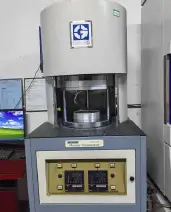
Mooney Viscometer
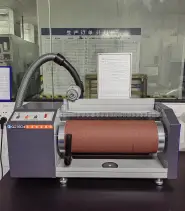
Abrasive Testing Machine
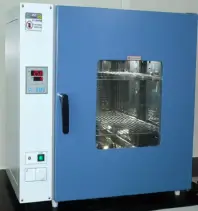
Burn-in Chamber
