
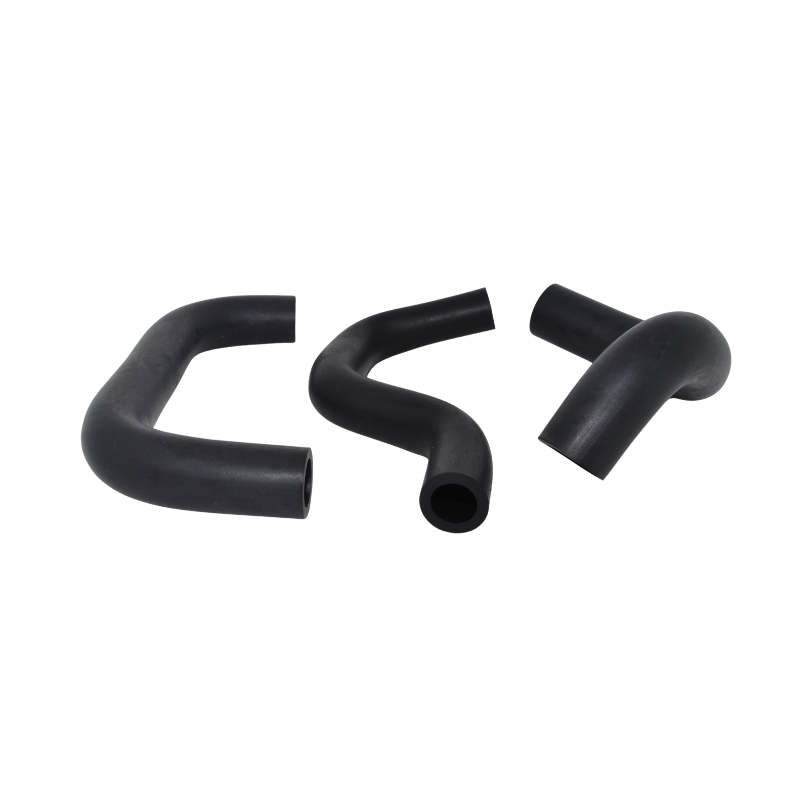
EPDM Washing Machine Inlet Water Hose
High-performance EPDM rubber tubing engineered for washing machine cold and hot water inlets, dishwasher supply lines, and comparable appliance connections requiring sustained pressure resistance from -40°C to +120°C. Ethylene propylene diene monomer’s non-polar saturated backbone delivers inherent resistance to water, steam, and household detergents — without the heat-induced degradation that sidelines lower-cost alternatives. Available in…
Specifications
|
Product Type: |
Reinforced rubber water supply hose
|
|---|---|
|
Base Polymer: |
Ethylene Propylene Diene Monomer (EPDM)
|
|
Structure: |
Composite — inner EPDM tube + textile reinforcement braid + outer EPDM cover
|
|
Color: |
Black (standard); custom available
|
|
Surface Finish: |
Smooth
|
|
Standards & Compliance: |
|
|
Hardness: |
65 ± 5 Shore A
|
|
Tensile Strength: |
≥ 10 MPa
|
|
Elongation at Break: |
≥ 280%
|
|
Tear Strength: |
≥ 28 kN/m
|
|
Recommended Service Temperature: |
-40°C to +120°C continuous; peak 130°C short-term
|
|
Hot Air Aging: |
120°C × 72h: hardness change ≤ ±8 Shore A; tensile retention ≥ 80%
|
|
Low‑Temperature Brittleness: |
No failure at -45°C (GB/T 15256)
|
|
Typical Applications: |
Washing machine cold/hot water inlet, dishwasher supply hose, water heater flexible connector, plumbing pressure line, industrial water supply
|
Description:
EPDM — ethylene propylene diene monomer — earns its position in water contact applications through a single structural fact: the polymer backbone carries no exposed double bonds susceptible to attack. Oxidation, ozone, steam, and dilute chemicals find nothing to cleave. That molecular stability translates directly into a hose that holds its sealing geometry and burst pressure after years of daily wash cycles running water from near-freezing to a sustained 90°C.
For a washing machine inlet hose, this matters beyond marketing language. Every fill cycle pressurizes the line against the solenoid valve; every hot-wash program drives the rubber toward its thermal ceiling. EPDM’s service window — reliably rated from -40°C through +120°C — spans the full operating envelope of domestic appliances, from unheated utility rooms in winter to dishwasher hot-fill programs. Reliable. Even at -45°C.
Typical Industry Applications:
Proven performance across demanding manufacturing environments.
| Industry | Typical Use Cases |
|---|---|
| Home Appliances | Washing machine cold/hot water inlet hose, dishwasher supply line, water heater flexible connector, tumble dryer steam inlet |
| Construction & Architecture | Flexible plumbing connectors, water meter bypass hose, pressure relief valve discharge line |
| Automotive & Motorcycle | Coolant overflow hose, radiator expansion tank connector, windshield washer supply tubing |
| Electronics & Industrial Machinery | Water-cooled equipment supply lines, low-pressure compressed air hose, humidifier inlet tubing |
Chemical Resistance Table:
| Chemical / Medium | Resistance | Notes |
|---|---|---|
| Cold water (≤ 40°C) | ✅ Excellent | Primary service medium; no swelling or degradation |
| Hot water (40–120°C) | ✅ Excellent | Core advantage of EPDM in appliance hose applications |
| Steam | ✅ Excellent | Suitable for steam inlet connections up to rated temperature |
| Ozone & UV | ✅ Excellent | Saturated backbone resists weathering and outdoor storage |
| Dilute alkalis / detergents | ✅ Excellent | Compatible with standard household and dishwasher detergent chemistry |
| Dilute acids (e.g., citric acid) | ✓ Good | Suitable for most concentrations encountered in appliances |
| Alcohols (e.g., ethanol) | ✓ Good | Moderate swelling at elevated concentrations; acceptable at typical use levels |
| Ketones (e.g., acetone) | ✓ Good | Acceptable for incidental contact; avoid continuous immersion |
| Phosphate-based cleaners | ✓ Good | Compatible at concentrations used in dishwasher tablet formulations |
| Concentrated sulfuric acid (> 70%) | ⚠ Limited | Surface attack at high concentration; not suitable for continuous service |
| Concentrated nitric acid | ⚠ Limited | Oxidizing acids may cause surface degradation over time |
| Mineral oils & greases | ✗ Not recommended | EPDM swells significantly in hydrocarbon oil environments |
| Petrol / gasoline | ✗ Not recommended | Non-polar hydrocarbons cause rapid swelling and softening |
| Chlorinated solvents (e.g., trichloroethylene) | ✗ Not recommended | Significant volume swell; structural degradation risk |
| Aromatic hydrocarbons (e.g., toluene) | ✗ Not recommended | Severe swelling; select FKM or NBR for these media |
In-House Quality Assurance & Testing:
At Micune Rubber, batch-to-batch consistency is guaranteed through our ISO-9001 certified Quality Management System. Every rubber compound and custom extrusion undergoes rigorous evaluation in our dedicated testing laboratory before shipment. We utilise industry-standard baseline testing, including Mooney Viscometers to measure compound viscosity and Torque Rheometers to verify exact vulcanisation characteristics. This ensures every material formulation strictly adheres to your required specifications and processing parameters.
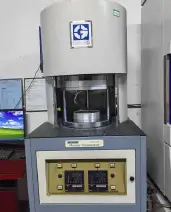
Mooney Viscometer
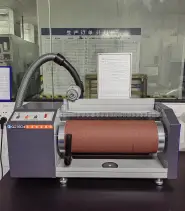
Abrasive Testing Machine
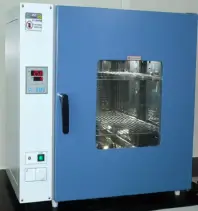
Burn-in Chamber
