
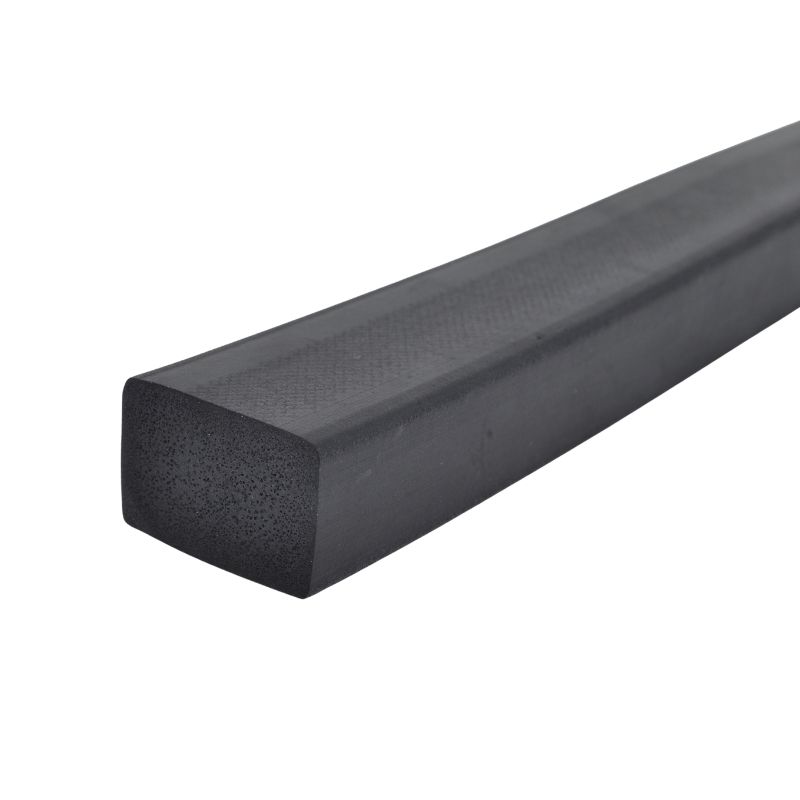
EPDM Rubber Seal Strip – Automotive Door, Window & Body Sealing
Moisture ingress is the primary failure mode for sealed electrical enclosures and domestic appliances — this extruded EPDM rubber seal strip is formulated to stop it at the source. Engineered from ethylene propylene diene monomer compound, it holds a stable compression seal from -40°C to +120°C without surface cracking or permanent set. Custom cross-section profiles…
Specifications
|
Product Type: |
Extruded solid rubber sealing strip / gasket profile
|
|---|---|
|
Base Polymer: |
Ethylene Propylene Diene Monomer (EPDM)
|
|
Structure: |
Solid
|
|
Color: |
Black (standard); grey, white, custom colors per spec
|
|
Surface Finish: |
Smooth / matte
|
|
Standards & Compliance: |
|
|
Hardness: |
50 ± 5 Shore A to 70 ± 5 Shore A (customizable)
|
|
Tensile Strength: |
≥ 8 MPa
|
|
Elongation at Break: |
≥ 250%
|
|
Tear Strength: |
≥ 18 kN/m
|
|
Recommended Service Temperature: |
-40°C to +120°C
|
|
Hot Air Aging: |
100°C × 72h: hardness change ≤ ±8 Shore A; tensile change ≤ ±20%
|
|
Low‑Temperature Brittleness: |
Pass at -40°C
|
|
Typical Applications: |
Refrigerator door seal, control cabinet gasket, electrical enclosure strip, appliance back panel seal, waterproof panel frame seal
|
Description:
EPDM’s resistance to moisture comes from something fundamental in its chemistry: the main polymer chain is fully saturated, meaning there are no reactive double bonds available for water, ozone, or oxygen to attack. That saturated backbone is why EPDM outperforms SBR and NR in any application where condensation, humidity cycling, or routine cleaning are part of the operating environment — exactly the conditions inside and around refrigerator cabinets, outdoor electrical panels, and industrial control enclosures.
The working range of -40°C to +120°C addresses two distinct failure points. At -40°C, the compound retains enough flexibility for the sealing lip to compress properly against a door frame — critical on freezer compartment seals that must function reliably after sitting cold overnight. At the upper end, 120°C is sufficient for control cabinet surfaces near transformer or contactor heat loads, and for appliance back panels on industrial dishwashers or laundry equipment. No brittleness at the bottom. No softening at the top.
Typical Industry Applications:
Proven performance across demanding manufacturing environments.
| Industry | Typical Use Cases |
|---|---|
| Home Appliances | Refrigerator door seals, washing machine door gaskets, dishwasher perimeter seals, oven panel seals |
| Electrical & Control Equipment | Control cabinet perimeter gaskets, electrical enclosure IP54/IP65 seals, distribution board door strips |
| Construction & Architecture | Exterior junction box seals, weatherproof panel frame gaskets, facade-mounted enclosure strips |
| Automotive & Motorcycle | Battery enclosure seals, ECU housing gaskets, EV charging socket perimeter seals |
| Electronics & Industrial Machinery | Server rack door seals, industrial display panel gaskets, automated production line enclosure strips |
Chemical Resistance Table:
| Chemical / Medium | Resistance | Notes |
|---|---|---|
| Water (tap / deionised) | ✅ Excellent | Core strength of EPDM; no hydrolytic degradation |
| Steam (low pressure, ≤120°C) | ✓ Good | Suitable within service temperature limit |
| Sodium hydroxide (NaOH, dilute–conc.) | ✅ Excellent | Strong alkali resistance; suitable for alkaline cleaning agents |
| Dilute sulfuric acid (H₂SO₄ ≤30%) | ✓ Good | Handles dilute concentrations well; avoid concentrated |
| Dilute hydrochloric acid (HCl ≤20%) | ✓ Good | Moderate concentration acceptable for incidental contact |
| Ethylene glycol / antifreeze | ✅ Excellent | Widely used in HVAC and cooling system sealing applications |
| Detergents / cleaning agents (aqueous) | ✓ Good | Compatible with routine surface cleaning; avoid solvent-based |
| Refrigerants (HFC R134a, HFO R32, R410A) | ✓ Good | Compatible with modern refrigerant types used in appliances |
| Ozone | ✅ Excellent | Saturated backbone provides inherent ozone resistance |
| UV / outdoor weathering | ✅ Excellent | No unsaturated main-chain bonds; no photo-oxidative cracking |
| Acetone / ketones | ⚠ Limited | Moderate swell; avoid prolonged or repeated contact |
| Mineral oil / aliphatic hydrocarbons | ✗ Not recommended | EPDM swells significantly; use NBR for oil-contact applications |
| Aromatic hydrocarbons (toluene, xylene) | ✗ Not recommended | High swell; incompatible with solvent environments |
| Petrol / gasoline | ✗ Not recommended | Not an oil-resistant elastomer; NBR or FKM required |
| Hydraulic fluids (water-glycol type) | ✅ Excellent | Suitable for water-based hydraulic media |
In-House Quality Assurance & Testing:
At Micune Rubber, batch-to-batch consistency is guaranteed through our ISO-9001 certified Quality Management System. Every rubber compound and custom extrusion undergoes rigorous evaluation in our dedicated testing laboratory before shipment. We utilise industry-standard baseline testing, including Mooney Viscometers to measure compound viscosity and Torque Rheometers to verify exact vulcanisation characteristics. This ensures every material formulation strictly adheres to your required specifications and processing parameters.
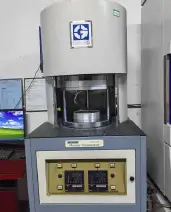
Mooney Viscometer
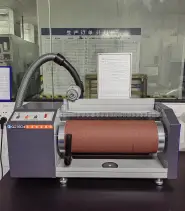
Abrasive Testing Machine
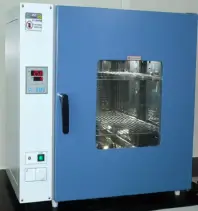
Burn-in Chamber
