
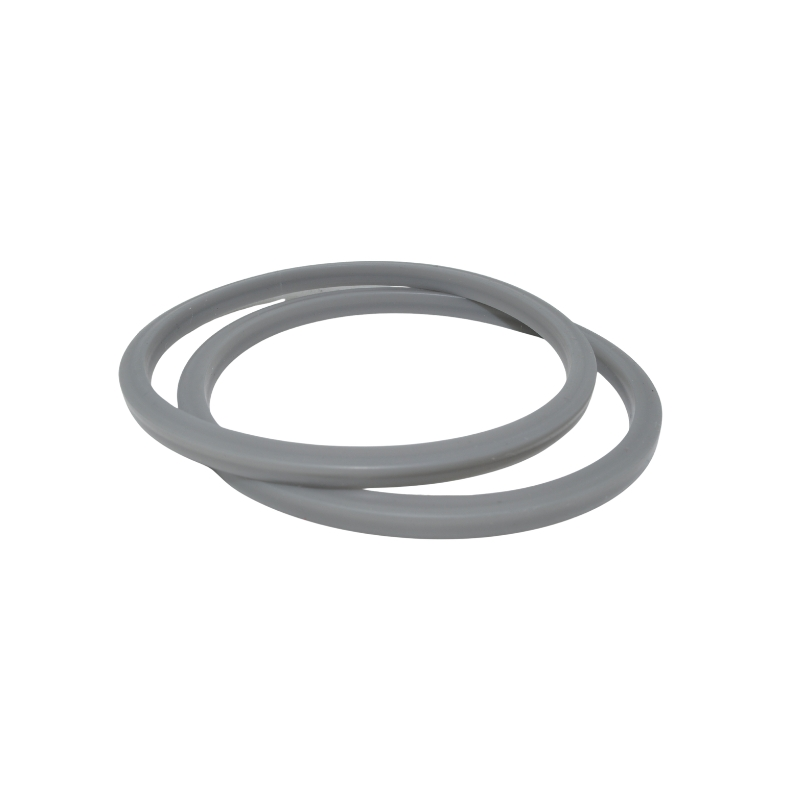
VMQ Solid Silicone Joint Sealing Ring
Thermal cycling, vibration, and fluid pressure converge at every pipe joint — and that’s exactly where this VMQ solid silicone sealing ring earns its keep. Engineered from high-purity methyl vinyl silicone rubber, it delivers reliable compression sealing across a continuous service range of -60°C to +200°C, with hardness tunable from 50 to 70 Shore A…
Specifications
|
Product Type: |
Compression-Molded Gasket / Joint Sealing Ring
|
|---|---|
|
Base Polymer: |
VMQ (Methyl Vinyl Silicone Rubber)
|
|
Structure: |
Solid
|
|
Color: |
Translucent white (standard); custom colors available (red, blue, grey, black, pantone matching)
|
|
Surface Finish: |
Smooth (Ra ≤ 1.6 μm typical)
|
|
Standards & Compliance: |
|
|
Hardness: |
50–70 Shore A (standard 60 ± 5 Shore A)
|
|
Tensile Strength: |
≥ 7.0 MPa
|
|
Elongation at Break: |
≥ 300%
|
|
Tear Strength: |
≥ 20 kN/m
|
|
Recommended Service Temperature: |
-60°C to +200°C (intermittent to +230°C)
|
|
Hot Air Aging: |
200°C × 72h: Hardness change ≤ ±5 Shore A
|
|
Low‑Temperature Brittleness: |
≤ -60°C
|
|
Typical Applications: |
Pipe joint gasket, hose coupling seal, tank fitting seal, dishwasher arm connection, water purification module seal
|
Description:
Most joint failures don’t happen because the gasket was too weak. They happen because the gasket couldn’t keep up with what the system was doing — thermal expansion pulling the flanges apart at 180°C, then contraction squeezing them back together at ambient, over and over, thousands of cycles a year. VMQ silicone addresses this problem at the molecular level. Its Si–O–Si backbone is inherently more thermally stable than carbon-chain elastomers, maintaining elastic recovery across a 260°C operating window that would destroy NBR or EPDM joints. The methyl and vinyl side groups give the compounder precise control over crosslink density, which translates directly to compression set resistance — the single most critical property for any static seal sitting in a groove under sustained bolt load.
Low compression set means the ring pushes back. Even after months of continuous clamping at elevated temperature, a properly formulated VMQ gasket retains enough stored elastic energy to track flange movement caused by vibration or thermal cycling. That’s not marketing language. That’s what keeps a dishwasher arm from dripping and a chemical process coupling from weeping.
Typical Industry Applications:
Proven performance across demanding manufacturing environments.
| Industry | Typical Use Cases |
|---|---|
| Home Appliances | Dishwasher spray arm connection seal, washing machine inlet/outlet coupling gasket, water purifier module joint ring |
| Food & Beverage Equipment | Beverage dispenser hose coupling seal, food-grade pipe flange gasket, dairy processing fitting ring |
| Plumbing & Water Treatment | Potable water pipe joint gasket, water meter coupling seal, water heater inlet/outlet ring |
| HVAC & Mechanical Systems | Chiller pipe coupling gasket, pump suction/discharge flange seal, coolant hose connection ring |
| Automotive & Motorcycle | Coolant hose coupling seal, EGR tube connection gasket, intercooler pipe joint ring |
| Industrial Machinery | Pneumatic fitting seal, hydraulic tank drain fitting gasket, chemical dosing line coupling ring |
Chemical Resistance Table:
| Chemical / Medium | Resistance | Notes |
|---|---|---|
| Water (hot & cold) | ✅ Excellent | Suitable for continuous immersion to 100°C |
| Steam (low pressure) | ✅ Excellent | Short-term exposure up to 150°C |
| Dilute acids (≤ 10%) | ✅ Excellent | Acetic, citric, phosphoric |
| Dilute alkalis (≤ 10%) | ✅ Excellent | Sodium hydroxide, ammonia solutions |
| Ethanol / isopropanol | ✅ Excellent | Common sanitizing agents |
| Food-grade oils (vegetable) | ✓ Good | Moderate swelling over extended exposure |
| Mineral oils | ⚠ Limited | Noticeable swelling; not recommended for continuous immersion |
| Petroleum fuels (gasoline, diesel) | ✗ Not recommended | Rapid swelling and property loss |
| Ozone / UV | ✅ Excellent | Inherent resistance; no antiozonants needed |
| Hydrogen peroxide (≤ 3%) | ✅ Excellent | Compatible with CIP sanitizing cycles |
| Silicone fluids | ✅ Excellent | Minimal interaction |
| Chlorinated water | ✓ Good | Suitable for municipal water systems |
| Aromatic solvents (toluene, xylene) | ✗ Not recommended | Severe swelling |
| Ketones (acetone, MEK) | ✗ Not recommended | Significant volume change |
| Concentrated acids (>30%) | ⚠ Limited | Short-term contact only; consult for specific acid |
In-House Quality Assurance & Testing:
At Micune Rubber, batch-to-batch consistency is guaranteed through our ISO-9001 certified Quality Management System. Every rubber compound and custom extrusion undergoes rigorous evaluation in our dedicated testing laboratory before shipment. We utilise industry-standard baseline testing, including Mooney Viscometers to measure compound viscosity and Torque Rheometers to verify exact vulcanisation characteristics. This ensures every material formulation strictly adheres to your required specifications and processing parameters.
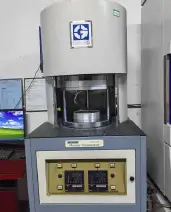
Mooney Viscometer
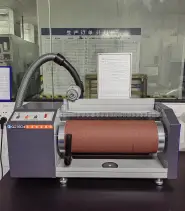
Abrasive Testing Machine
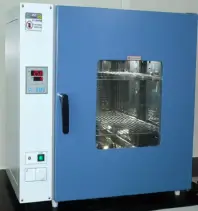
Burn-in Chamber
