
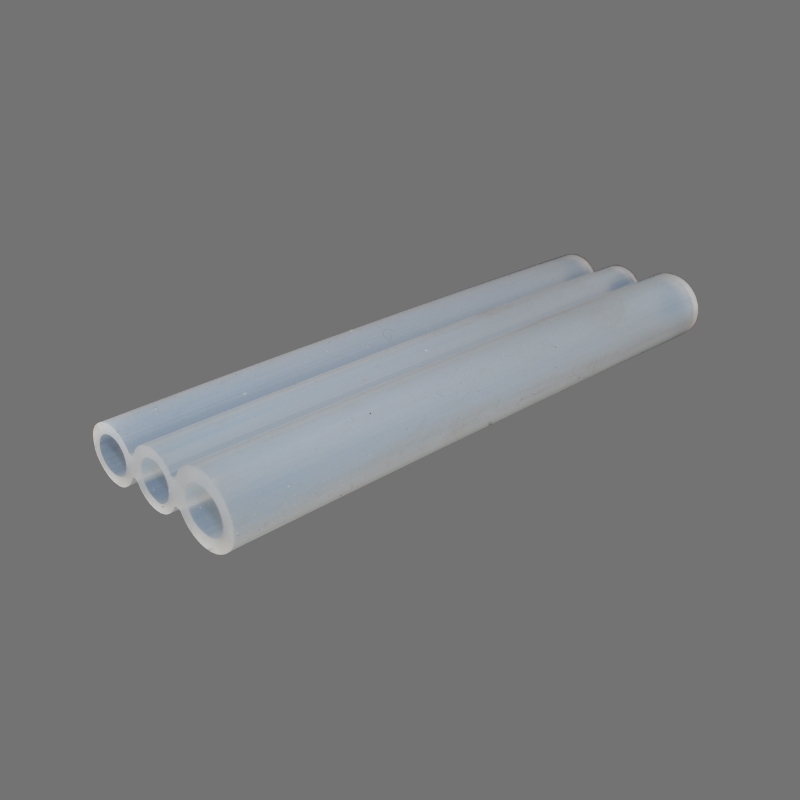
Food Grade Silicone Tube for Home Appliances
Every milliliter of water passing through your appliance tubing touches your family’s drinking supply. This platinum-cured HTV silicone tube delivers near-zero extractables and full compliance with China’s GB 4806.16-2025 food-contact standard — confirmed by CTI laboratory testing with overall migration reading N.D. (Not Detected) at 70°C × 2h. Rated from -60°C to +200°C continuous service,…
Specifications
|
Product Type: |
Extruded Tube (single-lumen, straight length or coiled)
|
|---|---|
|
Base Polymer: |
VMQ – High Temperature Vulcanized (HTV) Silicone Rubber, Platinum-Cured
|
|
Structure: |
Solid wall, single-layer or reinforced braid (per application)
|
|
Color: |
Translucent (natural), white, or custom colors available
|
|
Surface Finish: |
Smooth inner bore / Smooth or matte outer wall
|
|
Standards & Compliance: |
|
|
Hardness: |
50–70 Shore A (standard 60 ± 5 Shore A)
|
|
Tensile Strength: |
≥ 7.0 MPa
|
|
Elongation at Break: |
≥ 300%
|
|
Tear Strength: |
≥ 20 kN/m
|
|
Recommended Service Temperature: |
-60°C to +200°C (intermittent to +230°C)
|
|
Hot Air Aging: |
200°C × 72h: Hardness change ≤ ±5 Shore A
|
|
Low‑Temperature Brittleness: |
≤ -60°C
|
|
Typical Applications: |
Dishwasher water routing, coffee machine internal lines, water dispenser tubing, steam appliance hose, ice-maker feed tubes
|
Description:
Silicone rubber stands apart from organic elastomers in one critical respect: the Si–O–Si backbone is inherently inorganic. That molecular architecture translates directly into thermal stability far beyond what EPDM or NBR can deliver — continuous duty at 200°C without chain scission or plasticizer bleed. For appliance tubing carrying drinking water, coffee, or steam, this matters because there is simply nothing volatile to migrate into the fluid stream.
Platinum-catalyzed (addition-cure) vulcanization takes purity a step further. Unlike peroxide-cured silicone, which can leave acidic decomposition byproducts, a platinum system generates no cure residue at all. The result is a tube with exceptionally low extractables, no odor, and no taste transfer. CTI laboratory testing on Micune’s silicone compound confirmed overall migration at N.D. (Not Detected) under 70°C immersion for 2 hours in 10% ethanol simulant — well inside the ≤ 10 mg/dm² ceiling set by GB 4806.16-2025.
Typical Industry Applications:
Proven performance across demanding manufacturing environments.
| Industry | Typical Use Cases |
|---|---|
| Home Appliances – Kitchen | Dishwasher internal water routing hoses, coffee machine brew-path tubing, water dispenser cold/hot lines, ice-maker feed tubes |
| Home Appliances – Laundry & Steam | Steam iron internal silicone lines, garment steamer hoses, steam-mop fluid tubes |
| Food & Beverage Equipment | Commercial beverage dispenser tubing, juice machine silicone lines, food-processing peristaltic pump tubing |
| Medical & Laboratory Devices | Peristaltic pump tubing for non-implant fluid transfer, laboratory reagent delivery lines (non-critical) |
| HVAC & Water Treatment | Condensate drain tubing, humidifier water feed lines, point-of-use water filter connections |
Chemical Resistance Table:
| Chemical / Medium | Resistance | Notes |
|---|---|---|
| Potable Water | ✅ Excellent | Primary design medium; GB 4806.16 validated |
| 10% Ethanol Solution | ✅ Excellent | Per GB 31604.8-2021 migration test simulant |
| 4% Acetic Acid | ✅ Excellent | Per heavy metal migration test |
| Coffee / Tea (aqueous) | ✅ Excellent | No flavor absorption or discoloration |
| Dilute Detergent Solution | ✅ Excellent | Typical dishwasher environment |
| Sodium Hypochlorite (dilute) | ✓ Good | Short-term sanitization cycles only |
| Mineral Oil | ⚠ Limited | Silicone swells in hydrocarbon oils |
| Gasoline / Petroleum Solvents | ✗ Not recommended | Severe swelling and degradation |
| Concentrated Acids (H₂SO₄, HCl) | ✗ Not recommended | Attacks Si–O backbone |
| Steam (100–150°C) | ✅ Excellent | Suitable for intermittent steam exposure |
| Ozone / UV Radiation | ✅ Excellent | No cracking or surface degradation |
| Ethylene Glycol (coolant) | ✓ Good | Acceptable for closed-loop systems |
| Isopropyl Alcohol | ✓ Good | Short-term sanitization acceptable |
| Acetone / Ketones | ⚠ Limited | Causes temporary swelling; recovers on evaporation |
| Silicone Oils | ⚠ Limited | Swelling proportional to viscosity match |
In-House Quality Assurance & Testing:
At Micune Rubber, batch-to-batch consistency is guaranteed through our ISO-9001 certified Quality Management System. Every rubber compound and custom extrusion undergoes rigorous evaluation in our dedicated testing laboratory before shipment. We utilise industry-standard baseline testing, including Mooney Viscometers to measure compound viscosity and Torque Rheometers to verify exact vulcanisation characteristics. This ensures every material formulation strictly adheres to your required specifications and processing parameters.
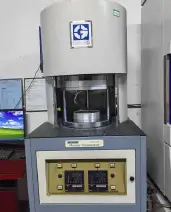
Mooney Viscometer
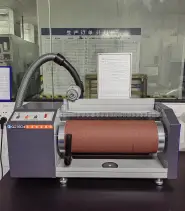
Abrasive Testing Machine
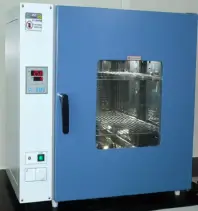
Burn-in Chamber
