
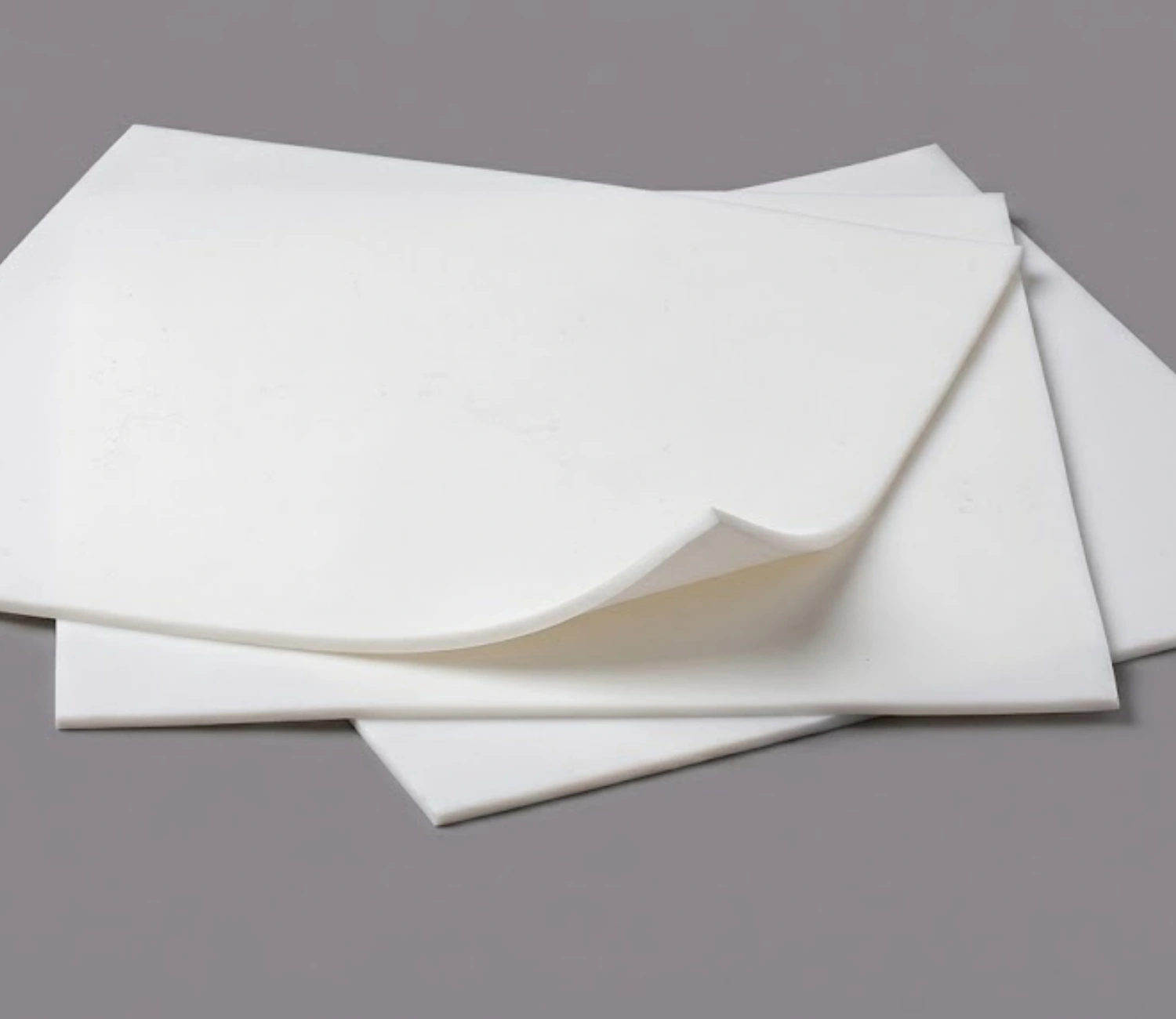
Food-Grade Silicone Rubber Compound
Certified compliance is the baseline — not a selling point. This food-grade silicone rubber compound (VMQ) has passed all five test categories under GB 4806.16-2025 via CTI Report No. A226016477010100101 (March 2026): sensory requirements, overall migration, potassium permanganate wastage, heavy metals, and volatile matter. Formulated from high-consistency vinyl methyl silicone (HTV) with secondary vulcanization for…
Specifications
|
Product Type: |
Food-Grade Silicone Rubber Compound / Extruded Profile / Molded Part
|
|---|---|
|
Base Polymer: |
Vinyl Methyl Silicone / Polydimethylsiloxane (VMQ)
|
|
Structure: |
Solid (extruded tube, strip, or compression/injection molded)
|
|
Color: |
Translucent white (standard); custom food-safe pigments available
|
|
Surface Finish: |
Smooth
|
|
Standards & Compliance: |
|
|
Hardness: |
40–70 Shore A (±5)
|
|
Tensile Strength: |
≥ 6.0 MPa
|
|
Elongation at Break: |
≥ 300%
|
|
Tear Strength: |
≥ 15 kN/m
|
|
Recommended Service Temperature: |
-60°C to +200°C
|
|
Hot Air Aging: |
200°C × 4h: hardness change ≤ ±8 Shore A; elongation retention ≥ 70%
|
|
Low‑Temperature Brittleness: |
≤ -60°C
|
|
Typical Applications: |
Baby feeding bottle parts, beverage machine tubing, food processing seals, coffee machine lines, drinking water connectors
|
Description:
Five test items. All passed — not just within limits, but with results well below the permitted thresholds. GB 4806.16-2025 is China’s national food safety standard for silicone rubber materials and products in direct food contact, and it covers the transfer risks that matter most to buyers of food grade silicone rubber: what migrates, what smells, what leaches under heat. CTI (Centre Testing International Group Co., Ltd.) ran the full battery on white translucent VMQ silicone in March 2026, and every result came back at or below detection limits — overall migration N.D. (< 3.0 mg/dm² against a ≤ 10 mg/dm² limit), potassium permanganate wastage N.D. (< 1.0 mg/kg against ≤ 10 mg/kg), heavy metals as Pb < 1 mg/kg, and volatile matter at 0.24 g/100g against a ≤ 0.5 g/100g ceiling.
That volatile matter figure — 0.24 g/100g — reflects secondary vulcanization, not just clean raw material sourcing. First-pass peroxide-cured silicone contains residual cure by-products that contribute to both odor and migration. Post-cure in a controlled oven at 200°C drives those volatiles out before the part ever contacts food. The result is a compound that passes sensory requirements without relying on strong fragrances or masking: normal color and luster, no foreign smell, no impurity — per the verbatim test conclusion.
Typical Industry Applications:
Proven performance across demanding manufacturing environments.
| Industry | Typical Use Cases |
|---|---|
| Baby & Infant Products | Bottle nipples, feeding tube liners, pacifier components, straw seals — direct oral contact; secondary vulcanized for zero-odor compliance |
| Beverage & Coffee Equipment | Internal delivery lines, pump tube connectors, valve seats, steam wand gaskets — sustained hot-water and steam cycling |
| Food Processing Machinery | Conveyor sealing strips, access door gaskets, mixing bowl lip seals, filling head seals — CIP/SIP washdown compatible |
| Drinking Water Systems | Tap aerator O-rings, filtration housing seals, inline tube connectors — potable water contact, chlorinated water stable |
| Home Appliances | Bread maker lid gaskets, rice cooker steam seals, dishwasher door strips — repeated thermal cycling, steam-resistant |
| Medical & Personal Care Devices | Oral irrigator tubes, CPR mask lip seals, sauna room liner profiles — biocompatible base polymer, autoclavable grades available |
Chemical Resistance Table:
| Chemical / Medium | Resistance | Notes |
|---|---|---|
| Water (cold and hot, ≤100°C) | ✅ Excellent | Negligible swell; KMnO₄ wastage N.D. in test |
| Steam (≤120°C / pressure steam) | ✓ Good | Short-duration autoclave acceptable; prolonged >130°C degrades |
| 10% Ethanol / dilute alcohol | ✅ Excellent | Overall migration N.D. under GB 31604.8-2021 simulant test |
| 4% Acetic acid (food-grade simulant) | ✓ Good | Pb extraction < 1 mg/kg; mild swell at elevated concentration |
| Vegetable and food-contact oils | ✓ Good | Moderate swell; acceptable for incidental contact |
| Dilute citric / lactic acids | ✓ Good | Stable under typical CIP pH 3–4 cycles |
| Dilute alkaline cleaners (NaOH ≤ 5%) | ✓ Good | CIP/SIP compatible at standard cleaning concentrations |
| Hydrogen peroxide (≤ 3%) | ✓ Good | Occasional sterilization use; prolonged exposure causes surface oxidation |
| Chlorinated water (potable levels) | ✓ Good | Stable in typical municipal supply chlorine concentrations |
| Mineral oils and petroleum greases | ⚠ Limited | Significant swell; not recommended for sustained hydrocarbon contact |
| Ketones (acetone, MEK) | ⚠ Limited | Noticeable swell; avoid in cleaning solvents |
| Concentrated sulfuric acid (>60%) | ✗ Not recommended | Chain degradation; avoid entirely |
| Concentrated nitric acid | ✗ Not recommended | Oxidative attack on siloxane backbone |
| Aromatic hydrocarbons (toluene, xylene) | ✗ Not recommended | Severe swell; incompatible with VMQ |
In-House Quality Assurance & Testing:
At Micune Rubber, batch-to-batch consistency is guaranteed through our ISO-9001 certified Quality Management System. Every rubber compound and custom extrusion undergoes rigorous evaluation in our dedicated testing laboratory before shipment. We utilise industry-standard baseline testing, including Mooney Viscometers to measure compound viscosity and Torque Rheometers to verify exact vulcanisation characteristics. This ensures every material formulation strictly adheres to your required specifications and processing parameters.
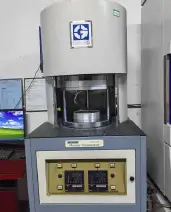
Mooney Viscometer
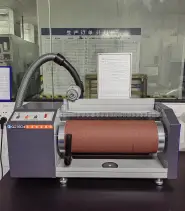
Abrasive Testing Machine
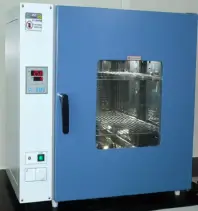
Burn-in Chamber
