
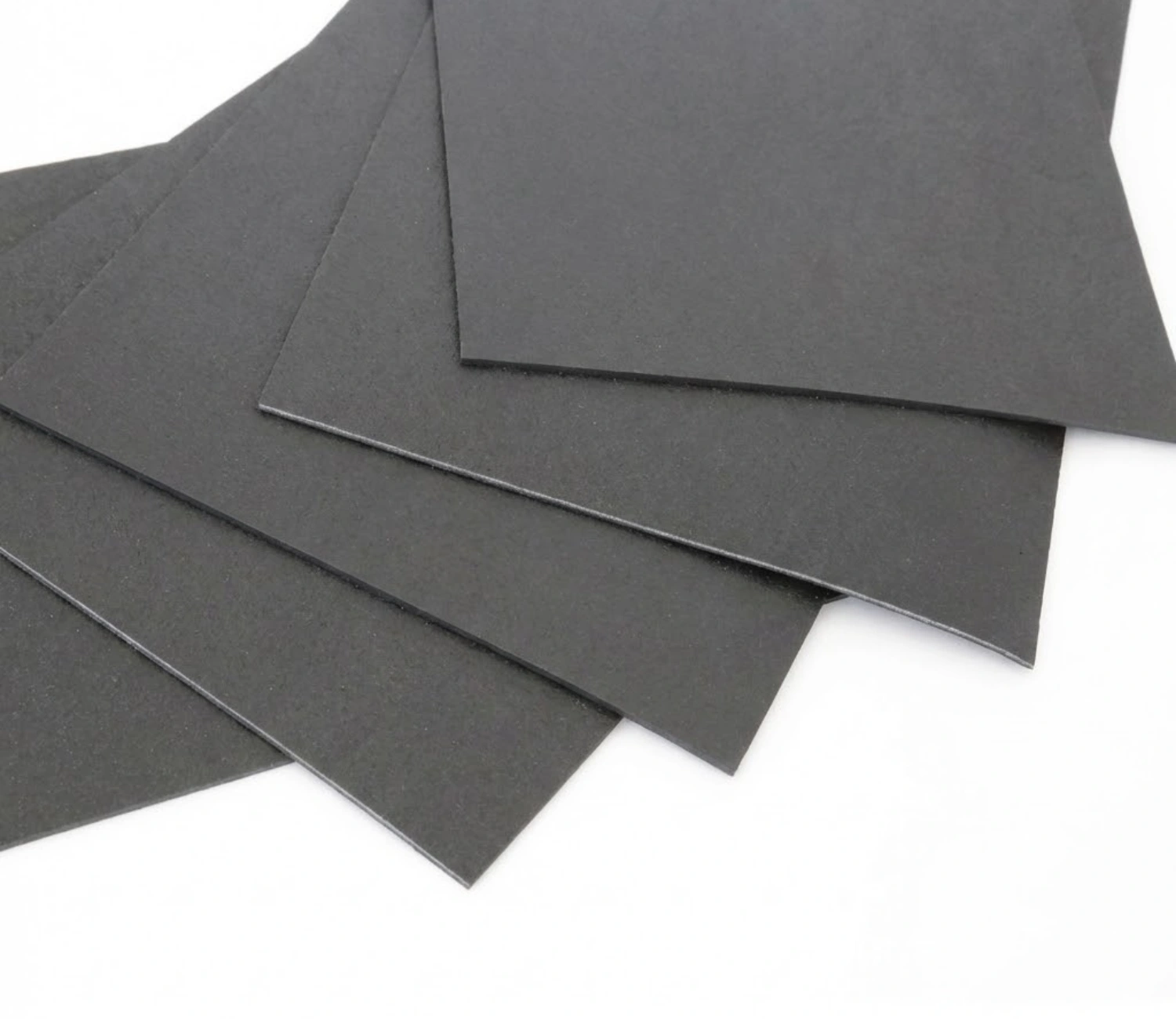
TPE Thermoplastic Elastomer Compound
Micune’s TPE thermoplastic elastomer compound series — spanning SEBS, SBS, and TPV grades — delivers rubber-like performance across 20–90 Shore A without vulcanization, enabling customers to transition from conventional thermoset rubber to fully recyclable, injection-moldable materials. Custom compounding is available to specification, with RoHS documentation and ISO 9001:2015 lot traceability on every batch.
Specifications
|
Product Type: |
Thermoplastic Elastomer Compound
|
|---|---|
|
Base Polymer: |
Styrene-Ethylene-Butylene-Styrene (SEBS) / Styrene-Butadiene-Styrene (SBS) / Thermoplastic Vulcanizate (TPV)
|
|
Structure: |
Solid; co-extrudable; overmoldable on PP / PE / PA substrates
|
|
Color: |
Natural, black; custom color per RAL / Pantone spec
|
|
Surface Finish: |
Smooth / matte / textured (mold-dependent)
|
|
Standards & Compliance: |
|
|
Hardness: |
20–90 Shore A (±5), grade-dependent
|
|
Tensile Strength: |
≥ 6 MPa (soft grades, 20–40 Shore A); ≥ 14 MPa (hard grades, 70–90 Shore A)
|
|
Elongation at Break: |
≥ 300%
|
|
Tear Strength: |
≥ 15 kN/m
|
|
Recommended Service Temperature: |
SEBS: −50°C to +125°C; SBS: −40°C to +80°C; TPV: −40°C to +120°C
|
|
Hot Air Aging: |
70°C × 168 h: tensile retention ≥ 80%; hardness change ≤ ±5 Shore A (SEBS / TPV grades)
|
|
Low‑Temperature Brittleness: |
≤ −45°C (SEBS); ≤ −40°C (SBS / TPV)
|
|
Typical Applications: |
Window / door channel seals, overmolded grips, cable jacketing, medical tubing, consumer product seals
|
Description:
TPE compounds occupy a practical middle ground that neither pure plastic nor vulcanized rubber can cover alone. The SEBS grade — a hydrogenated derivative of SBS — saturates the butadiene mid-block, eliminating the unsaturated double bonds responsible for UV degradation and thermal aging. That molecular change translates directly to outdoor durability: SEBS holds its elastomeric properties from −50°C through 125°C without the embrittlement or surface chalking common in SBS or unmodified EPDM at equivalent service hours.
SBS grades offer a cost-optimized path where UV exposure is not a primary design constraint — interior consumer seals, low-temperature cable jacketing, and soft-touch overmolds for electronics where transparent or lightly pigmented compounds are preferred. Wider melt-flow latitude also makes SBS easier to fill thin-wall profiles at moderate injection pressures.
TPV grades introduce a partially cross-linked EPDM rubber phase dynamically vulcanized into a PP thermoplastic matrix. This microstructure gives TPV noticeably better compression set resistance than SBS or unfilled SEBS — critical for gaskets and sealing applications where long-term seating force must be maintained — with a service ceiling of 120°C and lower creep at elevated temperatures.
Typical Industry Applications:
Proven performance across demanding manufacturing environments.
| Industry | Typical Use Cases |
|---|---|
| Automotive & Motorcycle | Weatherstripping, body panel seals, soft-touch interior trim overlays, cable grommet jackets |
| Construction & Architecture | Window channel seals (uPVC co-extrusion, EN 12365-1 / RAL GZ 716-1), door gaskets, curtain-wall glazing beads, expansion joint covers |
| Home Appliances | Appliance door gaskets, anti-slip feet, vibration-damping pads, refrigerator sealing strips |
| Electronics & Industrial Machinery | Cable and wire jacketing, connector seals, overmolded strain reliefs, anti-vibration mounts |
| Medical & Healthcare | Medical tubing, syringe seals, soft-touch device grips, flexible medical device components |
| Food & Beverage Equipment | Food-contact seals and gaskets (food-grade SEBS grades; applicable regulatory confirmation per customer request) |
Chemical Resistance Table:
| Chemical / Medium | Resistance | Notes |
| Water (up to 70°C) | ✅ Excellent | All grades; no hydrolysis concern |
| Dilute acids (10% H₂SO₄, HCl) | ✓ Good | SEBS / TPV preferred for prolonged exposure |
| Dilute alkalis (10% NaOH) | ✓ Good | Suitable for cleaning-agent environments |
| Alcohols (ethanol, IPA) | ✓ Good | Medical and sanitization contact acceptable |
| Aliphatic hydrocarbons | ⚠ Limited | SEBS / TPV show moderate swelling; SBS avoid |
| Aromatic hydrocarbons (toluene, xylene) | ✗ Not recommended | All grades; significant swelling |
| Mineral oils / hydraulic fluids | ⚠ Limited | TPV preferred; SEBS moderate; SBS avoid |
| Fuels (petrol, diesel) | ✗ Not recommended | Specify NBR or FKM for continuous fuel contact |
| Ketones (acetone, MEK) | ⚠ Limited | Short-term exposure only |
| Esters / plasticizers | ⚠ Limited | Monitor extractable migration in food-contact designs |
| UV / Ozone | ✅ Excellent (SEBS / TPV) | SBS grades require UV stabilizer addition for outdoor use |
| Steam (up to 100°C) | ⚠ Limited | Short-duration acceptable; avoid continuous steam |
| Silicone greases / lubricants | ✓ Good | Compatible for assembly lubrication |
| Dilute detergents / surfactants | ✓ Good | Suitable for appliance and consumer product environments |
In-House Quality Assurance & Testing:
At Micune Rubber, batch-to-batch consistency is guaranteed through our ISO-9001 certified Quality Management System. Every rubber compound and custom extrusion undergoes rigorous evaluation in our dedicated testing laboratory before shipment. We utilise industry-standard baseline testing, including Mooney Viscometers to measure compound viscosity and Torque Rheometers to verify exact vulcanisation characteristics. This ensures every material formulation strictly adheres to your required specifications and processing parameters.
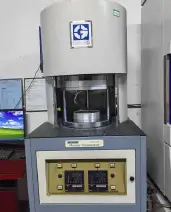
Mooney Viscometer
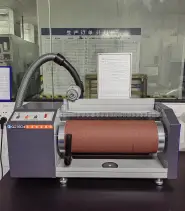
Abrasive Testing Machine
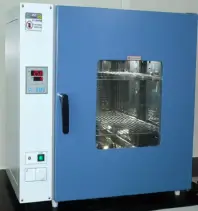
Burn-in Chamber
