
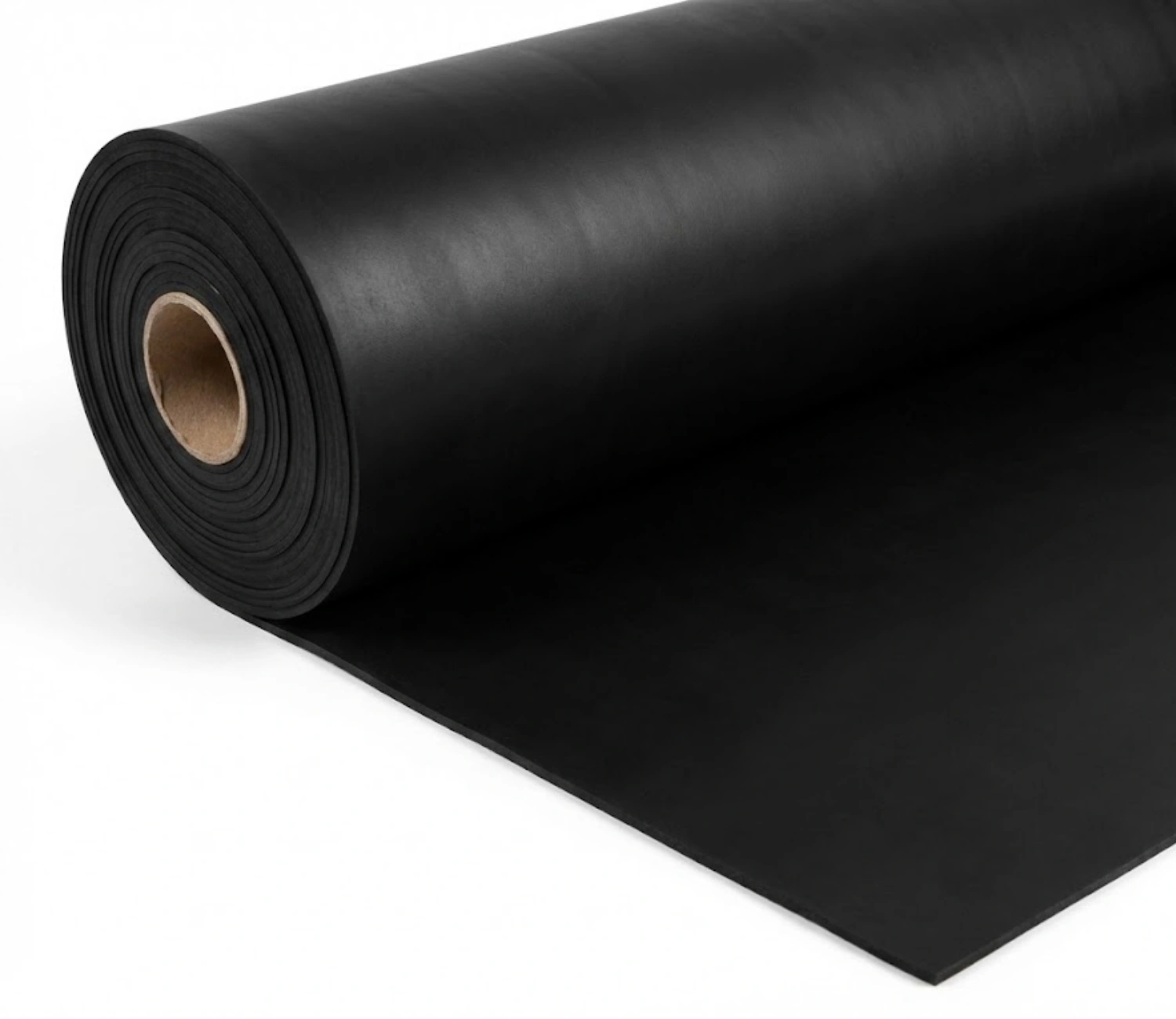
HNBR Rubber Compound
Hydrogenated nitrile butadiene rubber (HNBR) delivers what standard NBR cannot: sustained performance from -40°C to +165°C, a fully saturated polymer backbone that resists ozone attack, and tensile strength that holds up under continuous mechanical stress. The HNBR rubber compound is the material of choice for automotive timing belts, EV powertrain seals, refrigerant systems, and oil…
Specifications
|
Product Type: |
Rubber compound (raw mixed compound; finished/semi-finished parts available)
|
|---|---|
|
Base Polymer: |
Hydrogenated Nitrile Butadiene Rubber (HNBR)
|
|
Structure: |
Solid; peroxide-cured standard; sulfur-cure available for dynamic flex applications
|
|
Color: |
Black (standard); grey, green, custom colors per spec
|
|
Surface Finish: |
Smooth / matte; per customer drawing
|
|
Standards & Compliance: |
|
|
Hardness: |
40–90 Shore A (standard grades: 60 ± 5, 70 ± 5, 80 ± 5 Shore A)
|
|
Tensile Strength: |
≥ 14 MPa (typical 16–20 MPa depending on grade)
|
|
Elongation at Break: |
≥ 200% (typical 250–400%)
|
|
Tear Strength: |
≥ 30 kN/m
|
|
Recommended Service Temperature: |
-40°C to +165°C continuous; short-term peaks to +175°C
|
|
Hot Air Aging: |
150°C × 168h: tensile retention ≥ 70%; hardness change ≤ ±8 Shore A
|
|
Low‑Temperature Brittleness: |
≤ -40°C (low-ACN grades: ≤ -45°C)
|
|
Typical Applications: |
Automotive timing belts, EV powertrain/battery seals, oil field downhole packers and stators, refrigerant and A/C system seals, power steering hose liners
|
Description:
HNBR starts where NBR leaves off. The hydrogenation process selectively saturates the carbon-carbon double bonds in the nitrile butadiene backbone — eliminating the primary sites vulnerable to ozone attack, thermal cracking, and oxidative degradation. The result is a polymer that retains NBR’s core polarity (and therefore its oil resistance), while gaining a thermally stable, chemically inert backbone that functions continuously at 165°C rather than the 120°C ceiling of standard nitrile.
The acrylonitrile (ACN) content is the principal tuning lever. Grades at 36–44% ACN offer the strongest resistance to petroleum oils, ATF fluids, and engine coolants — critical for EV powertrain seal applications where exposure to thermal management fluids is constant. Drop to 17–28% ACN, and low-temperature flexibility improves sharply, reaching brittleness points below -45°C — the territory needed for snowmobile belts and cold-climate hydraulic seals. Neither extreme is a compromise: tensile strength remains ≥ 14 MPa across the ACN range, and ozone resistance is excellent in all fully saturated grades, full stop.
Typical Industry Applications:
Proven performance across demanding manufacturing environments.
| Industry | Typical Use Cases |
|---|---|
| Automotive & Motorcycle | Timing belts, power steering hose liners, engine mount bonded-metal bushings, crankshaft seals, torsional vibration dampers, A/C compressor shaft seals |
| EV & New Energy Vehicles | Battery module edge seals, e-drive unit oil seals, thermal management fluid hose liners, high-voltage connector gaskets, charging port weatherstrips |
| Oil & Gas / Energy | Downhole stator and packer seals, blow-out preventer elements, wellhead gaskets, sour gas (H₂S) service seals, hydraulic pump seals |
| Refrigeration & HVAC | Refrigerant-compatible O-rings and shaft seals (R134a, R410A, R32), compressor valve gaskets, air-handling unit seals |
| Industrial Machinery | Hydraulic cylinder rod and piston seals, roll covers, conveyor belt edge seals, pump diaphragms, high-pressure hose assemblies |
| Construction & Architecture | Expansion joint gaskets in thermal-cycling environments, chemical-resistant structural seals for industrial facilities |
Chemical Resistance Table:
| Chemical / Medium | Resistance | Notes |
|---|---|---|
| Petroleum engine oil (SAE 5W-30 to 20W-50) | ✅ Excellent | Primary design target; minimal swell even at 150°C |
| Automatic transmission fluid (ATF) | ✅ Excellent | High-ACN grades recommended |
| Power steering fluid | ✅ Excellent | Confirmed across common OEM fluid types |
| Diesel fuel | ✅ Excellent | Performs well in aged/oxidized diesel |
| Biodiesel (FAME blends) | ✓ Good | Higher ACN grades preferred for extended exposure |
| H₂S sour gas (wet) | ✓ Good | Recognized oilfield specification material |
| Refrigerants R134a, R410A, R32 | ✓ Good | Verify with application-specific immersion test for R32 |
| Ethylene glycol coolant | ✅ Excellent | Suitable for EV thermal management fluid circuits |
| Dilute acids (sulfuric, hydrochloric < 30%) | ✓ Good | Concentration and temperature dependent |
| Dilute alkalis (NaOH < 20%) | ✓ Good | Acceptable for most industrial cleaning environments |
| Ozone / UV weathering | ✅ Excellent | Fully saturated grades — no antiozonant needed |
| Hot water / steam ≤ 120°C | ✓ Good | Extended steam exposure at higher temperatures reduces tensile |
| Aromatic hydrocarbons (toluene, xylene) | ⚠ Limited | Moderate swelling; not recommended for prolonged immersion |
| Polar ketones (MEK, acetone) | ✗ Not recommended | Significant swelling — specify FKM for ketone environments |
| Concentrated oxidizing acids (HNO₃ > 30%) | ✗ Not recommended | Chemical attack regardless of grade |
In-House Quality Assurance & Testing:
At Micune Rubber, batch-to-batch consistency is guaranteed through our ISO-9001 certified Quality Management System. Every rubber compound and custom extrusion undergoes rigorous evaluation in our dedicated testing laboratory before shipment. We utilise industry-standard baseline testing, including Mooney Viscometers to measure compound viscosity and Torque Rheometers to verify exact vulcanisation characteristics. This ensures every material formulation strictly adheres to your required specifications and processing parameters.
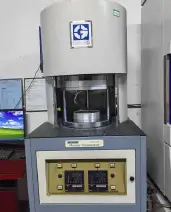
Mooney Viscometer
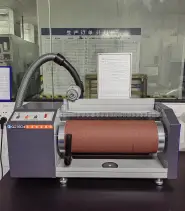
Abrasive Testing Machine
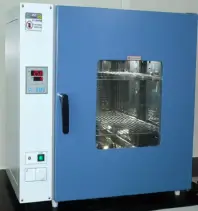
Burn-in Chamber
