
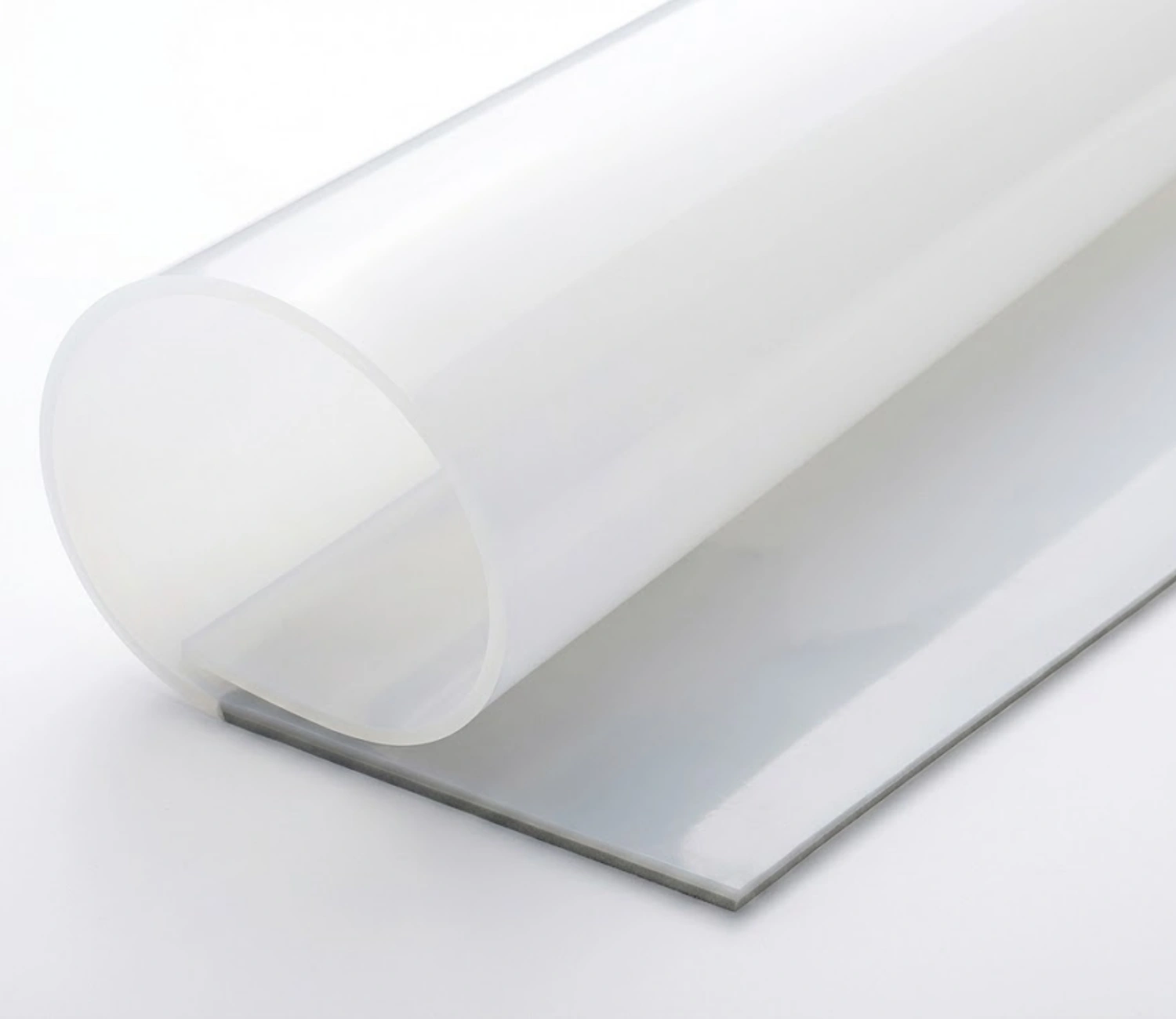
VMQ Silicone Rubber Compound
Engineered from high-molecular-weight polydimethylsiloxane (VMQ/MVQ), this silicone rubber compound family delivers a continuous service range of -60°C to +200°C with exceptionally stable elastic properties across that entire span — making it the compound of choice for oven door seals, food-contact tubing, LED waterproofing profiles, and appliance gaskets. Available as HTV solid or closed-cell foam, both…
Specifications
|
Product Type: |
Silicone rubber compound / extruded & molded profiles
|
|---|---|
|
Base Polymer: |
Vinyl methyl silicone rubber (VMQ / MVQ)
|
|
Structure: |
Solid
|
|
Color: |
Translucent, white, black, custom RAL
|
|
Surface Finish: |
Smooth matte / gloss
|
|
Standards & Compliance: |
|
|
Hardness: |
30–80 Shore A (±5)
|
|
Tensile Strength: |
≥ 7.0 MPa
|
|
Elongation at Break: |
≥ 200%
|
|
Tear Strength: |
≥ 15 kN/m
|
|
Recommended Service Temperature: |
-60°C to +200°C continuous; peak +230°C short-term
|
|
Hot Air Aging: |
200°C × 72h: hardness change ≤ ±8 Shore A; tensile retention ≥ 80%
|
|
Low‑Temperature Brittleness: |
No cracking at -60°C (GB/T 15256)
|
|
Typical Applications: |
Oven door seals, food-contact tubing, LED waterproofing profiles, appliance gaskets, custom silicone extrusion
|
Description:
Silicone rubber’s backbone is a Si–O–Si chain — one of the most thermally stable bonds in polymer chemistry, with bond energy around 445 kJ/mol compared to roughly 350 kJ/mol for a carbon–carbon bond. That structural difference is exactly why VMQ holds its mechanical properties from -60°C to +200°C with almost no change in modulus, while organic elastomers like EPDM or NBR begin to stiffen or soften at temperature extremes. In hardness ranges of 50–60 Shore A, the compression set and elastic recovery are at their best — a practical sweet spot for dynamic sealing applications where the gasket or strip must re-seal after repeated door cycling.
The foam variant of VMQ introduces a controlled closed-cell structure that adds low-density compressibility to the same thermal baseline. Where a solid strip might require precision groove geometry to achieve the right closing force, a foam seal can absorb dimensional variation in the mating surface. Both grades behave predictably down to -60°C — a specification that eliminates the brittleness failures seen with standard EPDM foam in cold-chain equipment.
Typical Industry Applications:
Proven performance across demanding manufacturing environments.
| Industry | Typical Use Cases |
|---|---|
| Home Appliances | Oven door seals (solid & foam), refrigerator door gaskets (foam), rice cooker lid seals, dishwasher door seals, steam iron seals |
| Food & Beverage Equipment | Food-contact tubing, silicone drinking straws, peristaltic pump tubing, beverage dispenser seals, baking tray gaskets |
| Lighting & LED | Waterproof LED strip sleeves (solid encapsulant profiles), luminaire IP67/IP68 perimeter seals, outdoor light housing gaskets |
| Construction & Architecture | Curtain wall foam weatherseals, window & door perimeter seals (foam), structural glazing joint backing |
| Electronics & Industrial Machinery | Cable entry seals, enclosure perimeter gaskets, transformer insulation profiles, vibration-damping pads |
| Automotive & Motorcycle | Engine bay sensor seals, high-temp wire harness grommets, EV battery enclosure gaskets |
Chemical Resistance Table:
| Chemical / Medium | Resistance | Notes |
|---|---|---|
| Hot dry air / ozone / UV | ✅ Excellent | Si–O backbone is inherently ozone- and UV-inert; no antiozonant required |
| Water (up to 70°C) | ✅ Excellent | Practically inert; ideal for hot-water food-contact cycles |
| Steam (low pressure, ≤120°C) | ✓ Good | Acceptable for intermittent steam contact; sustained high-pressure steam causes hydrolysis |
| Steam (>150°C, high pressure) | ⚠ Limited | Accelerated chain scission above 150°C under pressure; consult grade selection |
| Dilute aqueous acids (pH > 3) | ✓ Good | Suitable for mild acid cleaning environments |
| Concentrated acids (H₂SO₄, HCl) | ✗ Not recommended | Strong acid attacks Si–O bonds |
| Dilute alkalis (pH < 11) | ✓ Good | Stable in mild alkaline cleaning agents |
| Concentrated alkalis (NaOH >20%) | ⚠ Limited | Elevated alkali concentration causes gradual degradation |
| Animal fats & vegetable oils | ✅ Excellent | High suitability for food-contact applications involving cooking oils |
| Silicone fluids / silicone oil | ✅ Excellent | No swelling; chemically compatible |
| Ethanol / IPA (food-grade sanitizers) | ✓ Good | Suitable for sanitizer contact in food/beverage processing lines |
| Ketones (acetone, MEK) | ⚠ Limited | Moderate swelling; not recommended for prolonged immersion |
| Aliphatic hydrocarbons (hexane) | ⚠ Limited | Swells; acceptable for brief incidental contact only |
| Aromatic hydrocarbons (toluene, xylene) | ✗ Not recommended | Significant swelling and property loss |
| Petroleum-based oils & fuels | ✗ Not recommended | Use FKM or NBR for oil/fuel-contact applications |
In-House Quality Assurance & Testing:
At Micune Rubber, batch-to-batch consistency is guaranteed through our ISO-9001 certified Quality Management System. Every rubber compound and custom extrusion undergoes rigorous evaluation in our dedicated testing laboratory before shipment. We utilise industry-standard baseline testing, including Mooney Viscometers to measure compound viscosity and Torque Rheometers to verify exact vulcanisation characteristics. This ensures every material formulation strictly adheres to your required specifications and processing parameters.
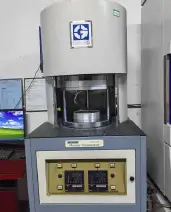
Mooney Viscometer
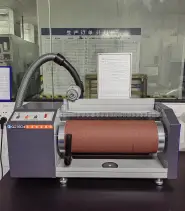
Abrasive Testing Machine
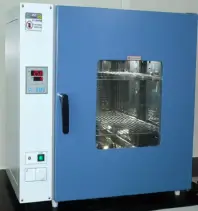
Burn-in Chamber
