
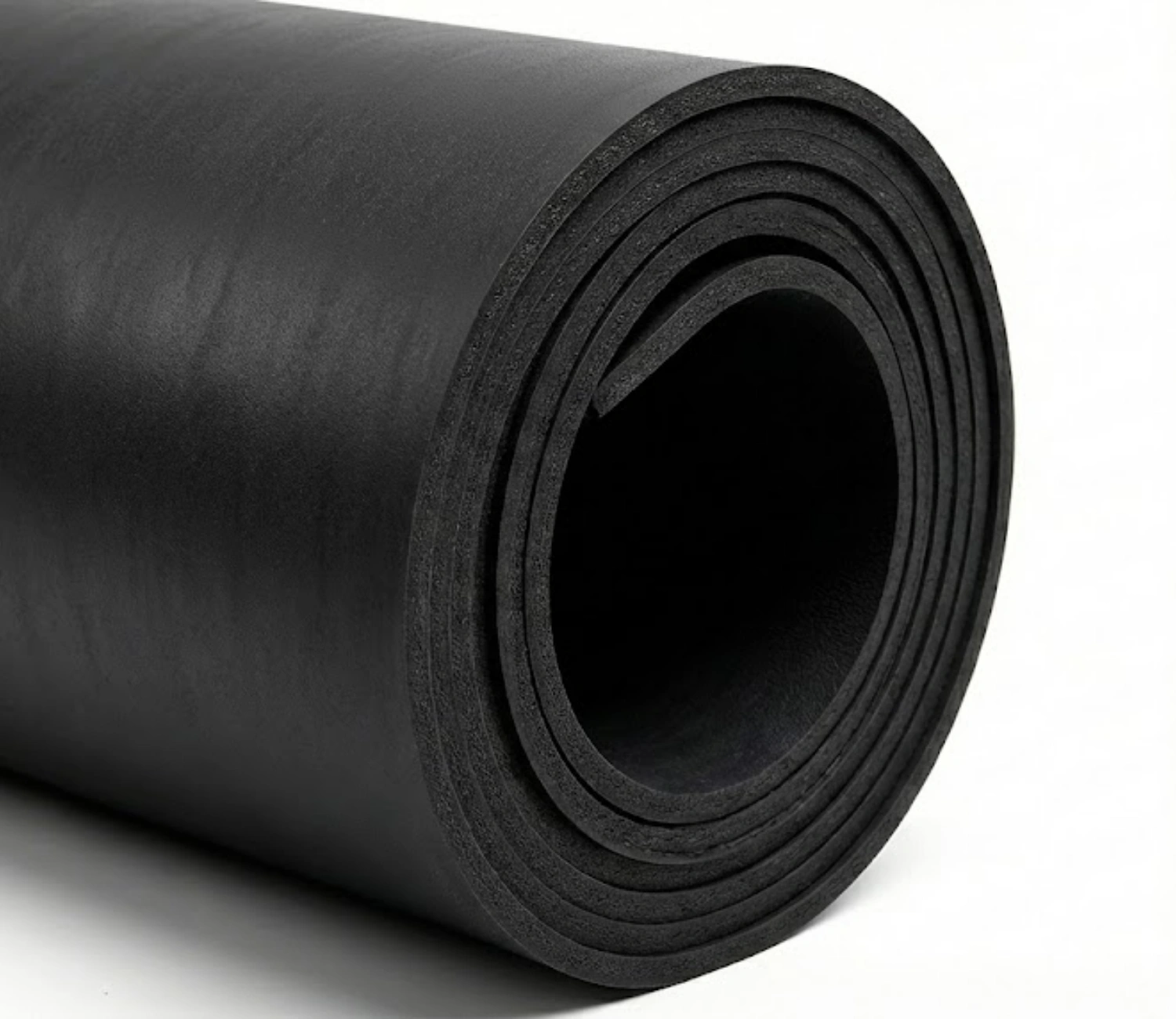
SBR Rubber Compound
Accounting for roughly half of all synthetic rubber consumed globally, styrene-butadiene rubber earns its dominance through a combination of qualities that natural rubber simply cannot match at scale: predictable aging behavior, superior abrasion resistance under dynamic loading, and a cost profile that holds up in high-volume production. Micune’s SBR rubber compound is compounded in-house from…
Specifications
|
Product Type: |
Rubber Compound (raw / semi-finished)
|
|---|---|
|
Base Polymer: |
SBR (Styrene-Butadiene Rubber) — SBR 1502 (cold-polymerized, dry) or SBR 1712 (oil-extended)
|
|
Structure: |
Solid compound; extrusion, calendering, or compression/transfer molding grades available
|
|
Color: |
Black (standard); light-colored grades available on request
|
|
Surface Finish: |
Per downstream process (extruded: smooth or matte; molded: per tool finish)
|
|
Standards & Compliance: |
|
|
Hardness: |
50–75 Shore A (standard range); 40–80 Shore A customizable
|
|
Tensile Strength: |
≥ 12 MPa (sulfur-cured, CB-reinforced grade)
|
|
Elongation at Break: |
≥ 350%
|
|
Tear Strength: |
≥ 28 kN/m
|
|
Recommended Service Temperature: |
-30°C to +100°C (continuous); up to +120°C short-term
|
|
Hot Air Aging: |
70°C × 72 h: Hardness change ≤ ±8 Shore A; tensile retention ≥ 80%
|
|
Low‑Temperature Brittleness: |
≤ -35°C
|
|
Typical Applications: |
Footwear outsoles, flat & conveyor belting, automotive floor mats, general-purpose gaskets, rubber rollers
|
Description:
SBR is not an exotic choice. That’s exactly the point. The copolymer backbone — roughly 23–25% styrene units bound into a butadiene chain — produces a rubber that behaves more consistently than natural rubber across a production run, ages more predictably in ambient conditions, and resists abrasion at a level that NR grades simply cannot sustain without heavy reinforcement. The absence of the double-bond-rich polyisoprene structure that makes NR so strong also means SBR oxidizes far less aggressively. In straightforward terms: a well-formulated SBR compound left on a warehouse shelf for six months will process almost identically to a freshly mixed batch. NR typically will not.
That consistency has made SBR the backbone of global rubber manufacturing — footwear, belting, flooring, and mechanical goods all depend on it. What distinguishes one compound from the next is not the base polymer. It is how the compound is built around it.
Typical Industry Applications:
Proven performance across demanding manufacturing environments.
| Industry | Typical Use Cases |
|---|---|
| Footwear & Sporting Goods | Outsole compounds for work boots, athletic footwear, and industrial safety shoes; mid-sole components requiring flex durability |
| Industrial Belting | Conveyor belt covers (top and bottom ply); flat transmission belting; food-conveyor belting (non-food-contact ply) |
| Automotive & Motorcycle | Floor mats, trunk liners, underbody vibration damping pads, brake hose jacketing |
| Construction & Infrastructure | Expansion joint fillers, floor underlayment sheets, anti-slip walkway mats |
| Mechanical & Industrial | Rubber rollers (printing, textile), general-purpose gaskets, buffer pads, calendar rolls |
| Home Appliances | Drum bearing seals, anti-vibration feet, door buffer pads in washing machines and dryers |
Chemical Resistance Table:
| Chemical / Medium | Resistance | Notes |
|---|---|---|
| Water (ambient & hot to 80°C) | ✅ Excellent | Good swell resistance; suitable for water-contact seals in non-immersion service |
| Dilute acids (H₂SO₄, HCl ≤ 20%) | ✓ Good | Acceptable for splash or occasional contact; not for continuous immersion |
| Dilute alkalis (NaOH ≤ 20%) | ✓ Good | Similar caveat as dilute acids; monitor at elevated temperatures |
| Aliphatic hydrocarbons (hexane, heptane) | ⚠ Limited | Moderate swelling; SBR is not an oil-resistant elastomer — use NBR for hydrocarbon service |
| Mineral oils & lubricants | ⚠ Limited | Significant volume swell; not recommended for continuous oil contact |
| Aromatic hydrocarbons (toluene, xylene) | ✗ Not recommended | Severe swell and degradation |
| Ketones (acetone, MEK) | ✗ Not recommended | SBR is highly susceptible to ketone attack |
| Ozone (ambient atmospheric) | ⚠ Limited | Requires antiozonant package; static ozone cracking without protection |
| Oxygen / UV weathering | ✓ Good | Significantly better than NR; antioxidant system extends service life further |
| Concentrated mineral acids | ✗ Not recommended | Not suitable for strong acid environments |
| Dry heat (continuous, ≤ 100°C) | ✓ Good | Good retention with proper antioxidant loading; above 100°C, properties decline |
| Steam (low pressure, ≤ 120°C) | ⚠ Limited | Acceptable for short-duration exposure; NBR or EPDM preferred for steam service |
| Alcohols (methanol, ethanol) | ✓ Good | Low to moderate swelling; suitable for alcohol-contact sealing in many cases |
| Brake fluid (glycol-based) | ✓ Good | Better than NR; verify with immersion test for specific fluid formulation |
In-House Quality Assurance & Testing:
At Micune Rubber, batch-to-batch consistency is guaranteed through our ISO-9001 certified Quality Management System. Every rubber compound and custom extrusion undergoes rigorous evaluation in our dedicated testing laboratory before shipment. We utilise industry-standard baseline testing, including Mooney Viscometers to measure compound viscosity and Torque Rheometers to verify exact vulcanisation characteristics. This ensures every material formulation strictly adheres to your required specifications and processing parameters.
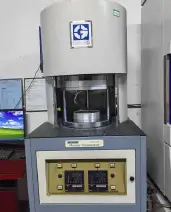
Mooney Viscometer
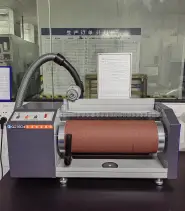
Abrasive Testing Machine
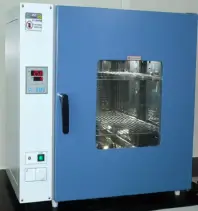
Burn-in Chamber
